
Chapter 1:
Consumer Usage & Behavior
This chapter reveals how frequent users scan QR codes, why they do so, where they usually scan, and what information they access upon scanning.
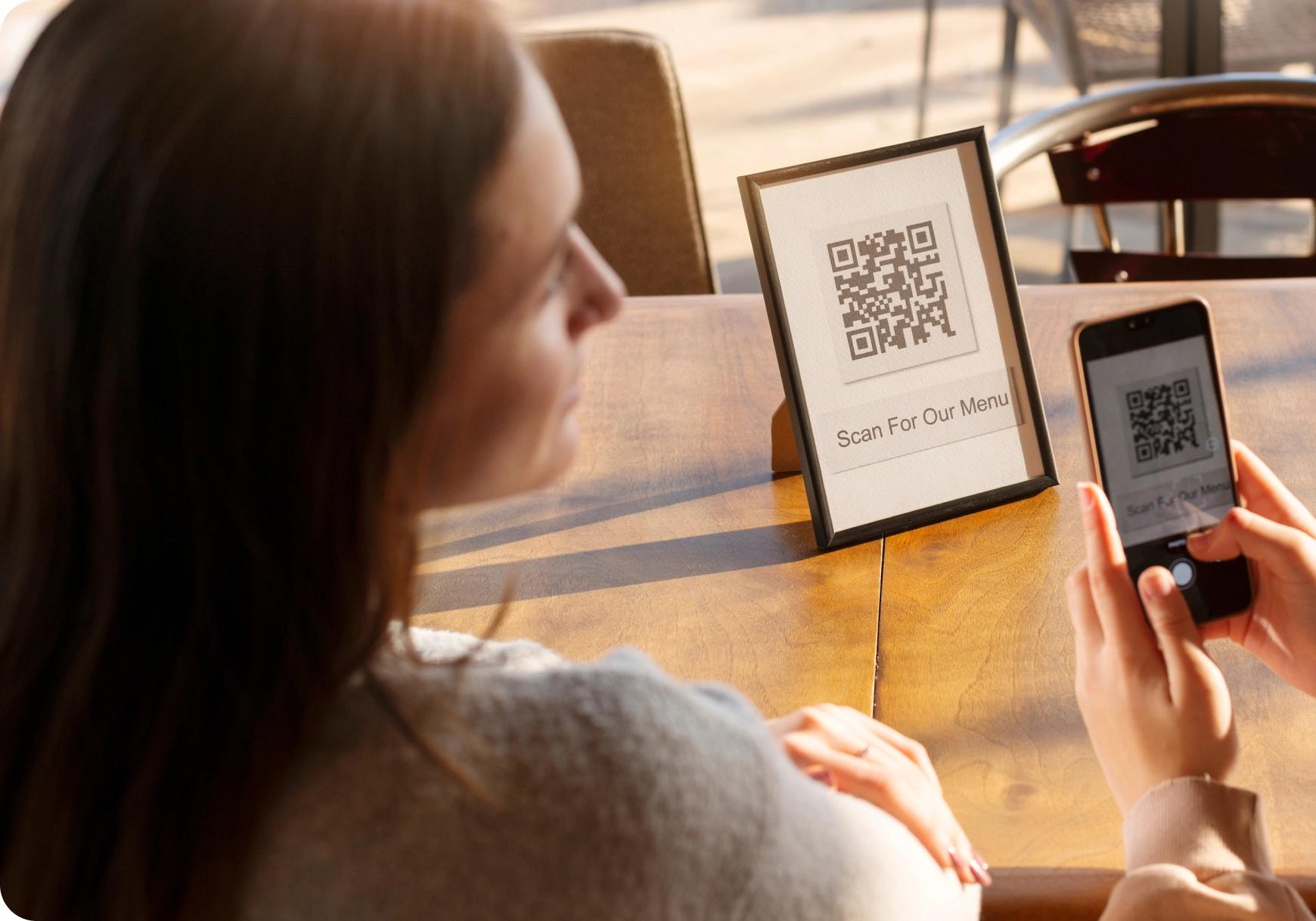
How consumers use QR codes today
QR code scanning has become routine for almost half of the users.
Our survey results revealed that 47% of respondents scan QR codes daily or several times a week.
What once felt new now functions as a standard digital habit. People expect QR codes in settings where information, transactions, and verifications must move quickly.
Here’s what you should do
Treat QR codes as a core interaction point, not an add-on. Place them where people make decisions, or need quick access, such as packaging, payment points, and on-the-go materials.
How much QR code usage has changed
Today, more than half of users say they use QR codes more often now than in 2023.
Growth remains steady despite earlier predictions of a drop after the pandemic. Consistent exposure in payment, marketing, and digital onboarding strengthens this behavior.
Here’s what you should do
Support a complete QR ecosystem. Build smooth offline-to-online paths, use analytics to understand behavior, and strengthen your first-party data capture.
Brands that ignore this shift risk losing high-intent users at the moment of engagement.
- Increased of usage
- Usage stay the same
- Decreased of usage
Why users scan QR codes today
People scan QR codes to order, pay, and learn with less friction.
 Restaurant menus
55%
Payments
44%
Product information
40%
Download an app
38%
Connect to Wi-Fi
34%
 Discounts/Promotions
29%
 Ticketing & Events
24%
Parcel delivery tracking
24%
Digital business cards
16%
 Educational content
13%
Augmented reality
9.6%
Note: Participants can select more than one response
Because QR codes remove unnecessary steps and save time, people now associate them with convenience rather than novelty.
UX Protocol
Here’s what you should do
Provide value the moment someone scans. Offer clear guidance, rewards, or practical help. There is also room to grow in areas like education and AR, which remain underdeveloped but hold strong potential for deeper engagement.
Where people usually scan QR codes
People tend to scan QR codes in places that feel safe, purposeful, and part of a trusted setting.
Top places identified as high-trust and high-scan places are: products & stores, restaurants, and events.
 Products & StoresRestaurants
Events
32%TV ads
29%Websites
22%Social Media
16%Flyers
16% Public Transport
Note: Participants can select more than one response
Scanning rates rise when the environment feels controlled, and the purpose is clear. QR codes thrive in places where attention is focused and trust is implied.
Here’s what you should do
Provide value the moment someone scans. Offer clear guidance, rewards, or practical help. There is also room to grow in areas like education and AR, which remain underdeveloped but hold strong potential for deeper engagement.
Where people usually SKIP scanning QR codes
People avoid scanning in places that feel unverified, unsafe, or out of context.
Emails or messages, public bathrooms, random flyers or posters are the top places where people skip scanning.
Emails or messages53%

Public bathrooms47%
Random flyers46%
Unknown social media36%
Website ads30%
TV ads25%
Note: Participants can select more than one response
Over 50% of users skip scanning QR codes in emails or messages due to trust concerns.
Cybersecurity and source uncertainty are the primary barriers to scanning. The hesitation builds when the code comes from an unverified or highly suspicious source.
This highlights that the trust deficit is tied to the context and source of the QR code, not the technology itself.
The industry must recognize that:
Security anxiety is High. More than half avoid scanning QR codes that come from unknown emails or suspicious sources. This shows that the fear of digital fraud is the strongest barrier to scanning.
Contextual distrust is widespread. People hesitate when the code appears in places that feel unsafe or uncontrolled, such as public bathrooms or random flyers.
Trust is directly linked to media authority. Hesitation is lowest when the code appears on major TV screens or other established media.
Here’s what you should do
To successfully implement QR codes, prioritize trust, context, and clear communication. Use clear labeling, recognizable branding, and straightforward instructions.
Where the user journey breaks down
Nearly 4 in 10 users struggle at the moment of scanning QR codes.
This shows that many failures happen before the user reaches the content.
39% report that their device can’t scan QR codes or that their camera quality is insufficient.
39%25%24%11%
Device/camera quality insufficient
39% of users affectedPoor placement
25% of users affectedSlow loading time
24% of users affectedNot mobile optimized
11% of users affected39% report device or camera quality issues as the primary barrier to scanning
This data reveals that the biggest friction point in the user journey is the moment of the scan itself, followed closely by the resulting digital experience.
These issues underscore how easily a scan fails when basic technical and design standards are overlooked.
- Failure to scan is the top barrier. The overwhelming primary issue (39%) is the camera’s inability to focus or detect the code. This is a massive failure rate at the critical moment of conversion.
- Physical setup is a close second. Poor placement, small size, or bad lighting accounts for 25 percent of complaints.
- Digital performance causes frustration. Slow-loading pages and content that is not mobile-friendly make up a combined 35 percent of complaints.
Here’s what you should do
Make sure the QR code is easy to scan and that the linked content loads quickly on mobile. This reduces friction and keeps users from dropping off.
Good placement, adequate size, proper lighting, and mobile-friendly pages are the key to keeping the user journey intact.
Key Takeaways
QR code scanning is now habitual for many users.
Usage continues to rise year after year.
People scan for practical reasons tied to convenience and speed.
Trust is shaped by source credibility and environment.
Technical execution remains a major challenge and must be improved to support adoption.
Descarga la app de QR TIGER


Recursos
Este generador de códigos QR es una marca registrada de QR TIGER INCORPORATED LIMITED.
'QR Code' es una marca registrada de DENSO WAVE INCORPORATED. © 2026 www.qrcode-tiger.com
'QR Code' es una marca registrada de DENSO WAVE INCORPORATED. © 2026 www.qrcode-tiger.com