
EU PPWR QR Code Requirement in 2026 and Its Business Impact

Starting August 12, 2026, the Packaging and Packaging Waste Regulation (Regulation (EU) 2025/40) comes into effect, with plans for phased implementation over the following years.
It includes rules for using QR codes on packaging to provide accurate, detailed, and up-to-date information to consumers, recyclers, and regulators.
This guide breaks down everything businesses need to know about the PPWR QR code requirements, along with best practices to implement the changes on product packaging smoothly.
Table of Contents
What is the PPWR?
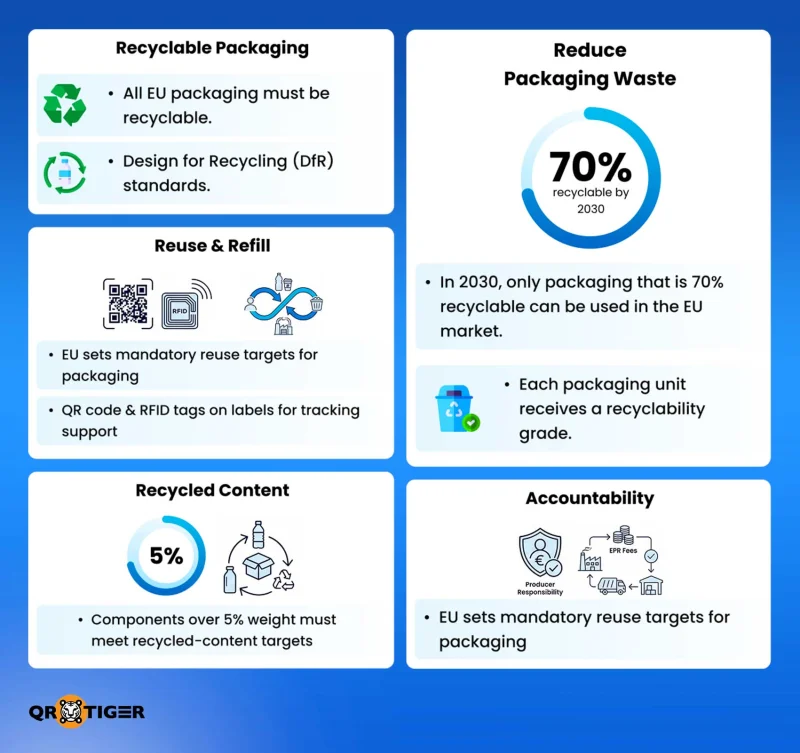
The EU Packaging and Packaging Waste Regulation (PPWR) is a legislation that aims to address the rising packaging waste, resource inefficiency, and pollution across Europe. It applies to all EU Member States without requiring national transposition.
It was adopted by the EU Commission on February 11, 2025, replacing the 1994 Packaging and Packaging Waste Directive (PPWD, 94/62/EC).
Working with the European Green Deal and the Circular Economy Action Plan, the union implemented the PPWR with the following objectives:
- Make packaging recyclable: By 2030, all packaging sold in the EU must be recyclable. The new rules explain how packaging, labels, and glue should be made so materials like plastic, paper, cardboard, and glass are easier to recycle.
- Reduce packaging waste: Each package will receive a grade (A, B, or C) based on its recyclability. Starting in 2030, only packaging that is at least 70% recyclable by weight (Grade C or better) can be sold in the EU.
- Use more recycled materials: Plastic parts that make up more than 5% of a package must contain a minimum amount of recycled plastic. Very small plastic parts, such as some labels, do not have to follow this rule.
- Support reuse and refill: Labels must stay attached during washing or be easy to remove when needed. They can also include QR codes or other digital codes to help track, collect, and reuse packaging.
- Make producers responsible: Companies that make packaging must help pay for the collection and recycling of packaging waste. The more recyclable their packaging is, the lower the fees they may have to pay.
The regulation applies to all packaging sold in the EU. It covers everything from making and using packaging to collecting and recycling it after use. It includes retail, shipping, and service packaging made from any material.
What are the PPWR QR codes for?
The PPWR encourages the use of a QR code generator or other standardized, digital marking technology to provide clear and accurate information, monitor packaging, reduce waste, and support the EU's circular economy.
Waste has been a persistent problem in the EU. In 2024, Eurostat recorded around 232.4 million tonnes of municipal waste generated in the EU alone, and its 2023 data showed that 79.7 million tonnes of packaging waste were generated in the EU.
While not a full replacement for physical labels and pictograms, QR codes on product packaging offer a quick, accessible way to provide information about a product’s packaging recyclability while occupying minimal space.
The PPWR news today emphasizes the regulation’s use of ‘harmonized physical labeling,’ and QR codes to make product packaging information transparent and accessible even after the product has entered the market.
What is the purpose of QR codes under the PPWR?
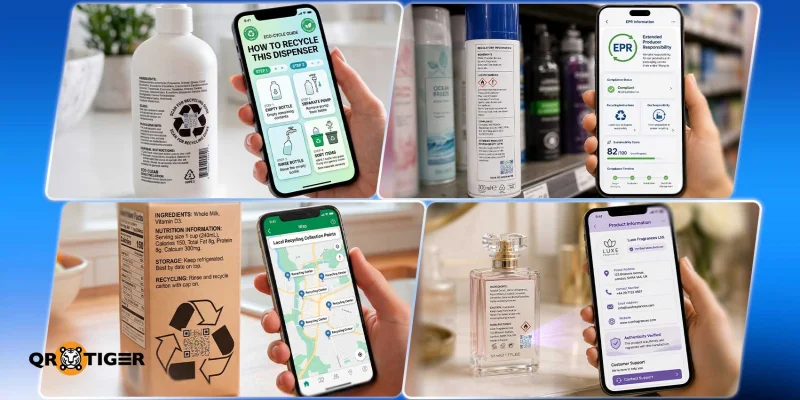
Under the new legislation, PPWR QR codes on packaging labels should support the following:
Sorting information
QR codes must provide clear sorting instructions for each part of the packaging to help consumers recycle the item correctly.
| Did you know: GS1 digital link QR codes are standard QR codes recommended for businesses worldwide. They allow companies to edit or update product information in real-time, while providing valuable analytics and tracking features. |
Reusability labels
To inform people about the availability of re-use packaging systems, a recycling QR code should be on packaging to provide information about a local, national, or Union-wide re-use system and different collection points where consumers can drop off reusable packaging.
EPR identification
In accordance with recent Extended Producer Responsibility (EPR) laws, symbols must also be placed in a QR code or another standardized digital marking technology to indicate that the producer of the product or packaging also fulfills their extended responsibility obligations.
Manufacturer info
Under Article 15 of the PPWR, manufacturers may use QR codes to include their name, trademark, postal address, and electronic contact point on product packaging. However, this is generally only an option if the packaging itself is too small or unsuitable for standard labeling.
Specific guidelines for QR code usage under PPWR
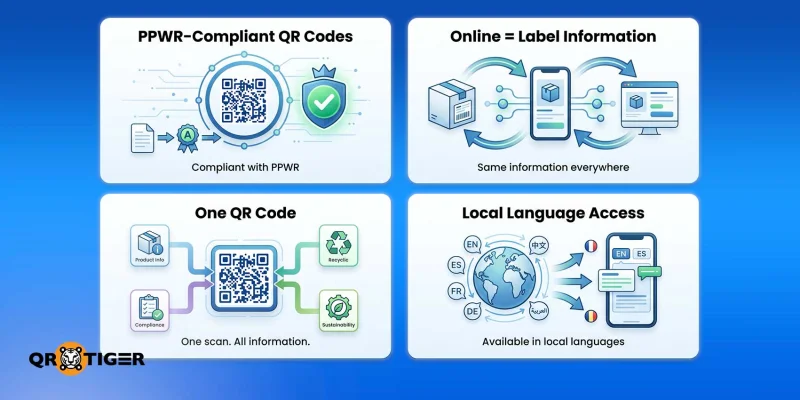
The regulation provides specific guidelines on how to use QR codes properly:
1. When using QR codes, it should be based on the specifications and guidelines set by the PPWR’s implemented acts (ex. sorting info, manufacturer info, reusability labels, etc.).
2. All information found on the container (including the QR code) must be presented when customers buy a brand’s product online.
3. If the product is subject to other EU regulations that require QR codes (like the Digital Product Passport) and other data carriers, only one QR code should be used. It should link to the information required by the PPWR, as well as the regulations applicable to the contained product.
4. As part of their new labeling guidelines, the PPWR also stated that any labeling information provided through QR codes must be available in the language of the EU member states where the product is sold.
How should businesses prepare for the PPWR?
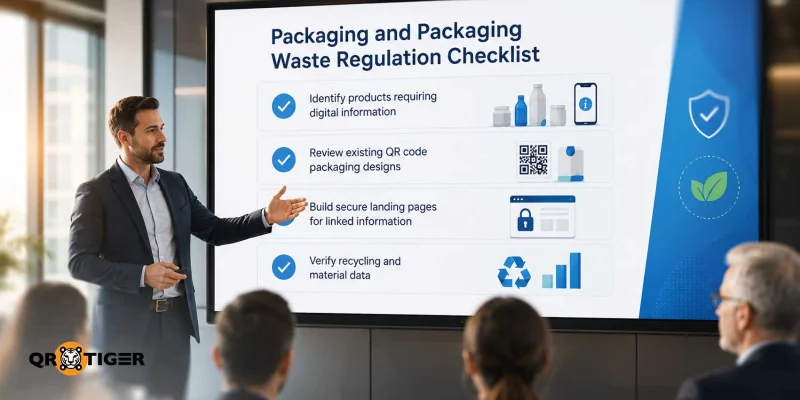
Here are EU PPWR compliance steps for businesses to ensure a smooth transition to the new packaging regulations:
- Identify which products need digital information: Prioritize packaging that requires detailed recycling instructions or material transparency beyond what fits on a physical label.
- Review existing QR code packaging designs: Check whether your existing QR codes are easy to scan and can support additional digital information required under the PPWR.
| Did you know: QR TIGER’s industry report revealed that around 35% of QR code users trust black and white QR codes with a logo more than overly customized designs. |
- Build secure landing pages for linked information: QR codes should direct users to a mobile-friendly landing page containing accurate, up-to-date information on material composition, recycled content, return or refill information, producer details, and other compliance-related data.
- Verify recycling and material data: Any information linked through your QR code should be verified by your suppliers. Material composition, recycled content percentages, recyclability claims, and disposal instructions should be included to build consumer trust.
| Did you know: According to QR TIGER’s 2026 Industry report, 49% of users scan QR codes to access helpful information. That’s why businesses should focus on linking directly to content rather than on low-value engagements. |
- Monitor future regulatory acts issued by the EU Commission: While the PPWR offers an overall framework, additional acts help define and expand the technical requirements for both traditional and digital labeling.
Regularly monitor updates from the European Commission to ensure your QR code strategy remains compliant.
How to create a custom PPWR QR code
- Visit the most advanced QR code generator online.
- Pick a solution that would best suit a PPWR requirement.
- Provide the required data.
- Generate your QR code.
- Customize and personalize your code.
- Test-scan your QR code first to ensure reliability.
- Download and print on the desired packaging.
.gif)
What this means for business leaders
The PPWR QR code requirements establish a more sustainable, transparent, and standard packaging system across Europe.
Companies must start looking for a reliable, enterprise-grade QR code generator that provides the tools they need to deliver required information in compliance with regulations and offers a better, more seamless experience for consumers.
Taking action early will help your business stay ahead in the market, remain compliant with standards, and support the EU's transition to a circular economy.
People also ask
What is the new packaging in 2026?
The Extended Producer Responsibility (EPR) laws and regulations are pushing for packaging that is easier to recycle and recover at the end of its life. Businesses must use more sustainable, recyclable materials in their packaging.
Where do plastic products end up?
Research supported by the United Nations Development Program indicates that about 79% of all plastic products end up in landfills or in natural environments such as oceans, rivers, and soil. The remaining 21% of plastic waste is then disposed of via recycling or Incineration.