
Etiquetado de códigos QR para la distribución de arroz: Cómo la FCI de la India está expandiendo el sistema

El Gobierno Central de la India ha expandido su sistema de etiquetado de códigos QR como parte de sus esfuerzos para ayudar a modernizar la gestión de granos alimenticios, fortalecer la seguridad alimentaria y mejorar la transparencia en todo el Sistema de Distribución Pública (PDS) del país.
Antes del uso de códigos QR, la Corporación de Alimentos de la India (FCI) empleaba métodos como la codificación de colores, alertas de SMS y registros manuales y documentación para rastrear los granos dentro de su Sistema de Distribución Pública.
Estos métodos parecían prometedores en teoría. Sin embargo, resultaron ineficaces para prevenir la desviación a gran escala, como reveló la Oficina Nacional de Encuestas por Muestreo. la fuga de granos alcanzó el 41.7% en 2011-2012 debido a un monitoreo deficiente.
El nuevo etiquetado de códigos QR de la FCI en los sacos de cereales cubrirá molinos de arroz y otras agencias de adquisición y distribución en Andhra Pradesh, Telangana y Odisha durante la temporada de comercialización actual.
El despliegue sigue a los exitosos programas piloto recientes del Centro en Andhra Pradesh y Punjab, que les permitieron distribuir eficientemente sus bolsas de granos con mínimos problemas.
Tabla de Contenidos
¿Por qué India está expandiendo su sistema de etiquetado de códigos QR?
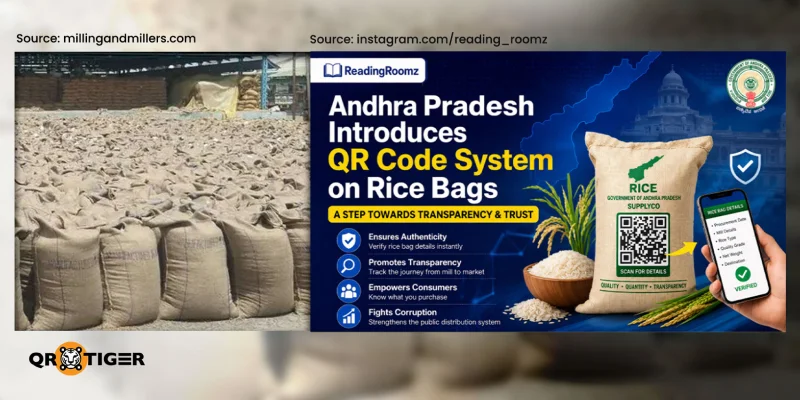
Según una declaración de uno de los funcionarios del Ministerio de Alimentación, el uso de códigos QR para el etiquetado de activos les permite rastrear a qué centros de adquisición y agencias de adquisición pertenece el grano, y a qué temporada pertenece.
El ministerio de alimentos puede monitorear mejor la logística de distribución de granos mediante funciones de seguimiento de códigos QR y responsabilizar a las partes interesadas a través de la visibilidad detallada que proporciona.
Según la Press Trust of India, un funcionario de alto rango no identificado del Ministerio de Alimentación central también mencionó que "Actualmente, se ha otorgado un subsidio en la etapa de distribución. Con" Etiquetado QR sabríamos exactamente qué cereales se están distribuyendo.
Esto significa que los códigos QR también pueden determinar la distribución de subsidios, ya que pueden proporcionar datos precisos sobre dónde se distribuyó el grano y a quién se le entregó, utilizando una factura automatizada.
No es la primera vez que el Sistema de Distribución Pública de la India hace esto; han estado adoptando activamente la tecnología de códigos QR desde principios de 2026, utilizándolos como tarjetas de racionamiento, cupones de alimentos digitales y para verificación de identidad.
¿Cómo funciona la etiqueta de código QR para bolsas de arroz?
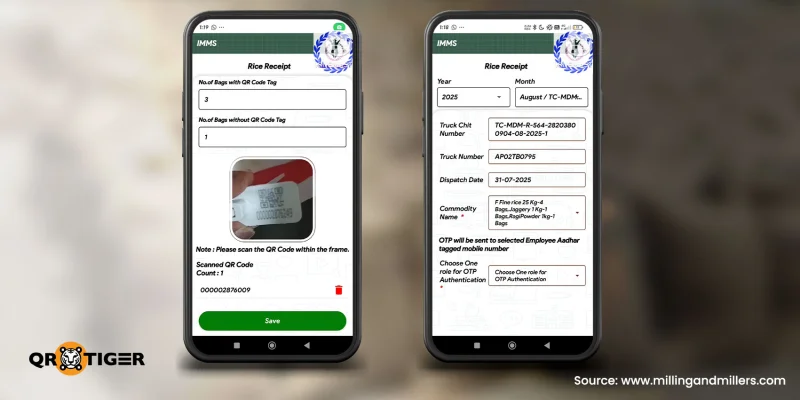
Para garantizar que el sistema de etiquetado QR para los granos alimenticios funcione de manera confiable, sigue estos pasos:
Cada bolsa recibe un código QR durante el proceso de molienda. Al escanearlo, el código QR mostrará detalles clave, incluyendo el nombre de la agencia de adquisiciones, el centro y la temporada en que se molió el arroz.
Las bolsas de granos alimenticios se mueven a través del sistema de distribución y están sujetas a escaneos aleatorios en los almacenes de FCI, lo que permite a las autoridades rastrear fácilmente su recorrido a través del sistema de etiquetado de códigos QR y minimizar el riesgo de reciclaje y desvío.
Las bolsas de cereales se envían luego a las tiendas de raciones dentro de las áreas piloto especificadas para ser distribuidas a los hogares de bajos ingresos elegibles e individuos que poseen una tarjeta de racionamiento válida.
Los dispositivos electrónicos de punto de venta (POS) dentro de la tienda de raciones también pueden escanear los códigos QR antes de la distribución.
Una vez escaneado por el dispositivo POS de la tienda de raciones, la factura de los alimentos se genera automáticamente, junto con el cálculo de la subvención.
La iniciativa cubrirá alrededor de 1 millón de toneladas de arroz de Andhra Pradesh, mientras que Telangana y Odisha contribuirán alrededor de 500 toneladas métricas cada uno, con el objetivo de adopción a nivel nacional basado en evaluaciones futuras.
¿Qué desafíos podría enfrentar este sistema?
Mientras que el uso de un código QR para etiquetar bolsas de arroz puede ofrecer ventajas significativas, la implementación del sistema a gran escala depende en gran medida de la coordinación entre las agencias de adquisiciones, los molineros, los transportistas, los operadores de almacenes y las tiendas de precios justos.
Si el piloto de India resulta exitoso, podría permitir al gobierno central expandir la red aún más, reflejando el etiquetas de códigos QR de valor han traído a otras cadenas de suministro de alimentos en Asia.
Una solución inteligente para la distribución de alimentos básicos
El reciente piloto de India de su sistema de etiquetado de códigos QR para el seguimiento de granos marca otro paso importante hacia la mejora y modernización del sistema de distribución pública más grande del mundo.
Con la ayuda del sistema de etiquetado de códigos QR de FCI, el gobierno central de la India puede reducir la filtración, mejorar la transparencia y mejorar la distribución subsidiada de una sola vez, reforzando el papel de los generadores de códigos QR como una solución escalable para sistemas eficientes de distribución de alimentos.
A medida que más países adoptan la trazabilidad digital, el programa de códigos QR de la India ofrece lecciones valiosas sobre el futuro de la distribución de alimentos y la prestación de servicios públicos.