
Malaysians to Secure ETA QR Codes as Travel Rules Tighten in 2026

As of April 2026, airlines in Malaysia can deny boarding on the spot, as visa-free travelers must complete pre-arrival forms or present an ETA QR code upon boarding.
This is due to the recent rollout of pre-arrival registration systems in over 30 countries worldwide, including the United States, the European Union, and countries in the Asia-Pacific region, to make both visa and non-visa travel more secure.
Table of Contents
Pre-arrival systems are now rolling out in 2026
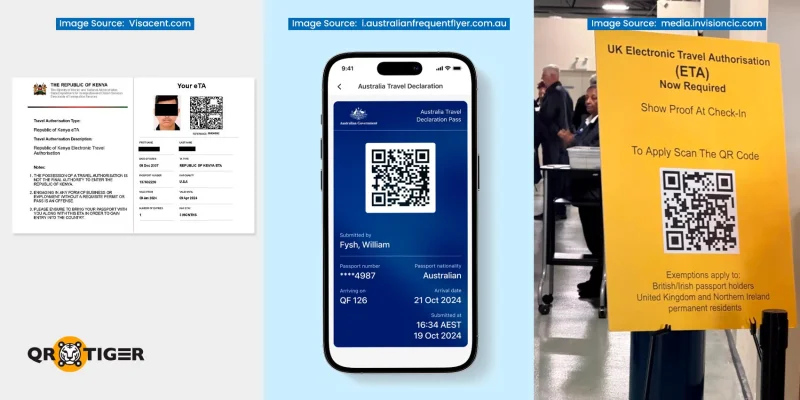
Starting as early as February 2026, countries are now requiring Electronic Travel Authorization (ETA) before travelers can book travel to that destination, serving as a digital, pre-screening entry requirement.
These ETAs can be delivered as digital credentials or through travel QR codes that airlines can scan to access a person’s digital passport, ID, and other credentials, enabling better screening before arrival.
So far, more than 30 countries worldwide are rolling out pre-arrival registrations this year, requiring travelers to wait over 72 hours for their ETAs to be approved.
How the new travel requirement affects Malaysian travelers and other tourists
Malaysian passport holders have always enjoyed a relatively quick and easy visa-free travel process. The country ranked 6th on the Henley Passport Index, allowing visa-free travel to around 183 destinations.
With the rollout of arrival registration systems in multiple countries, Malaysia, along with 84 visa-free countries, is now required to submit digital entry forms and ETIAS (for the European Union) or ETA QR codes for pre-arrival approval.
On a side note, Malaysian travelers to the UK must scan a UK ETA QR code to install the app, fill out the forms, and save a screenshot of their ETA QR code as an offline copy.
The sudden changes have raised concerns among international travelers about the risk of being denied boarding if issues arise during the pre-approval process, potentially leading to missed flights.
Presently, Malaysian passport holders are encouraged to check entry requirements as soon as they book their flights and to complete the forms at least 72 hours before their flights.
Authorities also encourage travelers to use official government websites to avoid falling victim to scams and keep an offline copy of their QR codes for quick access.
How to apply for an ETA QR code
The application process for ETA QR codes can vary depending on destination and origin. Whether it’s South Korea’s K-ETA, the US ESTA, or the EU’s upcoming ETIAS, each one can have certain discrepancies in its process.
Instead of listing each country’s application process, here is a general guide on how to apply for an ETA QR code:
1. Check online to see if the country you intend to travel to requires pre-arrival registration, preferably through their official government website.
2. If it does require an ETA, check to see what the requirements are and gather your documents accordingly.
The most common requirements for applying to an ETA are as follows:
- A valid passport (often including a biometric chip)
- Working email address
- A credit/debit card for the processing fee
- A recent passport-style digital photo
3. Apply through the official website or app, and fill in all the required details.
4. After completing the application, you can then proceed to pay the processing fee (if there is any).
5. Submit your application and wait for approval.
Once approval is finished, depending on the ETA system, you will receive a QR code along with your approved documents, which you can either print or save offline to show to border officers before boarding your flight.
Where does the need for ETA QR codes come from
As International travel becomes more accessible, ETA systems help optimize the travel process, not only making it faster but also ensuring security by pre-screening visa-exempt visitors before they arrive.
Using a QR code generator for ETAs is a bold move that simplifies travel and enhances security. Although non-visa travelers planning to visit these countries may find it a hassle, its use can be a cost-effective solution.
With an ETA QR code, countries can easily share, verify, and authorize travelers with a simple scan, improving coordination while offering a modernized way to manage tourists and visitors.
Among the countries that currently support them are the UK, US, Australia, New Zealand, South Korea, Sri Lanka, Kenya, and the European Union, while countries like Thailand, Singapore, Vietnam, and the Philippines have adopted them as part of their digital arrival cards.
The shift to smart, secure, and digital travel
As more countries adopt digital passes and advanced QR code software for pre-arrival systems, Malaysians and other foreign travelers will have a more structured, regulated travel experience, with ETA QR codes becoming a standard part of international travel.
While the added steps may feel restrictive right now, they are paving the way for a faster, more secure border control system. By adapting early and staying informed, travelers will continue to enjoy smooth international trips.