
How 8 Fragrance Brands Use QR Codes to Build Connection Beyond Scents

QR code marketing for perfume brands is the perfect way to attract an audience without displaying the product up front.
The number one selling point of perfumes is usually the emotional experience they create. People rarely buy a fragrance just because it smells pleasant; they buy it because of how it makes them feel and how they want to be perceived by others.
That’s why the most effective perfume marketing campaigns today go beyond traditional product displays. They focus on immersive storytelling that invites customers into the brand experience and helps them discover a scent that feels uniquely theirs.
Through advanced QR code software, brands in the perfume industry deliver clever, richer, and more interactive perfume packaging, helping them build stronger, longer-lasting connections with customers that continue well beyond the first spray.
Table of Contents
Top perfume QR code campaigns that make scents more memorable
Let’s look into how brands around the world use fragrance QR codes to strengthen emotional engagement well beyond scents and bottles, and what you can learn from them.
1. Rare Beauty “Scratch and Sniff” billboard QR code
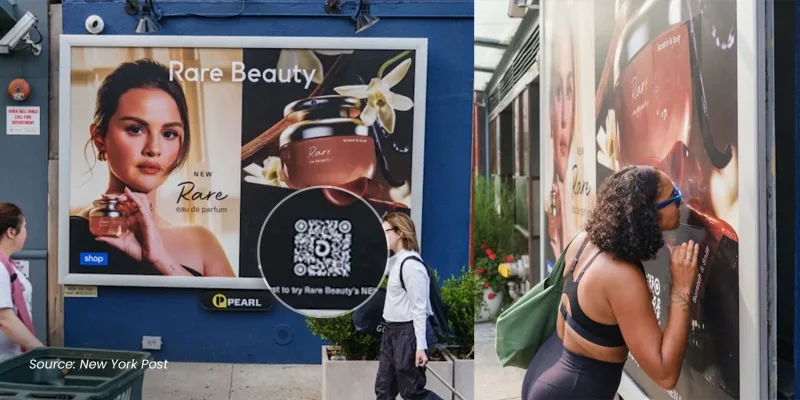
QR codes in the cosmetic industry and beauty packaging may not be new, but a campaign that creates an emotional connection with the audience before conversion is rare.
Selena Gomez’s Rare Beauty did just that. To promote the launch of their newest perfume collection, the brand launched an interactive “Scratch and Sniff” campaign across Manhattan.
People who pass by its billboards can physically scratch their surface and smell the perfume (like in brochures and magazines), creating an experience that immediately captures their attention.
And while the experience is still fresh, consumers can then scan the QR code on the billboard, which leads to a product page where they can get free samples.
Combining sensory marketing with perfume QR codes enabled the brand to create a seamless customer journey from physical to digital content, allowing users to engage with the brand without any issues.
🚀Key Takeaway: QR codes work best when they extend an experience people are already emotionally engaged in. While the scent is still fresh in their memories, have a QR code ready to instantly guide interested consumers to your product page.
2. Caraïbes cultural QR codes
Caraïbes Fragrance, a women- and minority-owned brand, began incorporating QR codes into its perfume marketing campaign to create a culturally immersive, unique educational experience for customers.
The QR codes on the bottles direct people to digital content exploring the cultural history behind each scent.
According to Kiese N. Sam, the founder of Caraïbes fragrance, the QR code was used to welcome consumers to the soul of the Caribbean, as if they were welcomed guests in its living, breathing history.
This is reflected in their first released fragrance, “Vile d’Amour,” which drew inspiration from St. John’s Island’s “Love City” and included a QR code that, when scanned, highlighted Caribbean and Latin American cultural influences.
🚀Key Takeaway: Scents become far more impactful when customers can actively explore the stories behind them. QR codes help you deliver a message that gives consumers a more meaningful reason to engage with your product.
3. Lattafa product verification QR code
A report on user trust and perception found that verified branding (42%) is the second-most important factor boosting people’s trust.
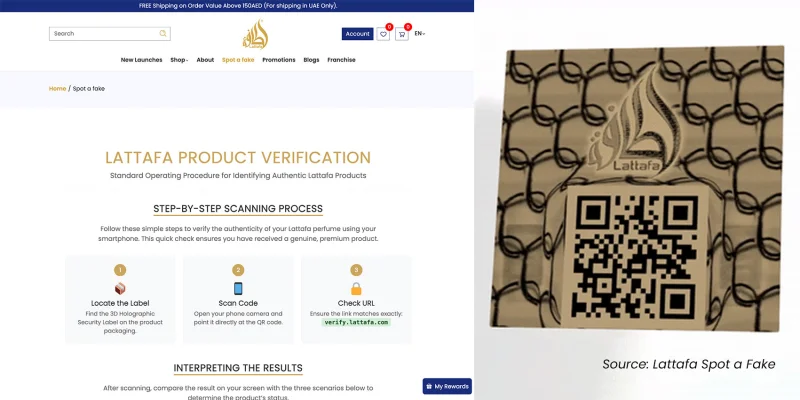
To combat the sale of counterfeit fragrances and improve customer trust, Lataffa perfumes began implementing holographic QR codes and serial numbers across its fragrance lines.
Scanning the QR code allows consumers to verify the authenticity of the product they bought. Each perfume contains a unique QR code and serial number, making it more difficult to replicate.
This practical use of QR code security enabled Lattafa Perfumes to build customer trust while giving buyers greater confidence that they were purchasing genuine products directly associated with the brand.
🚀Key Takeaway: QR codes can do more than drive engagement; they can also communicate legitimacy and trust. Give your customers easy access to product verification through a GS1 Digital Link QR code to improve brand perception, customer confidence, and long-term loyalty.
4. Bastille Parfum information QR codes
In response to growing consumer demand for ingredient transparency, Bastille Parfums, a French fragrance company, introduced QR codes to enhance product transparency and customer engagement.
Created using a trusted, advanced QR code software, the QR codes give customers direct access to detailed fragrance information, including ingredient origins, fragrance composition, bottling dates, olfactory profiles, and more
According to the fragrance brand’s tech provider, the QR codes will benefit consumers by providing more product information, while Bastille will benefit from interaction and engagement insights that help them better understand their customers and identify trends.
🚀Key Takeaway: Modern consumers want information they can trust, more than beautiful packaging. QR codes help your brand meet this expectation by transforming your fragrances into a digital touchpoint for transparency.
5. Bond No. 9 internet fragrance QR code
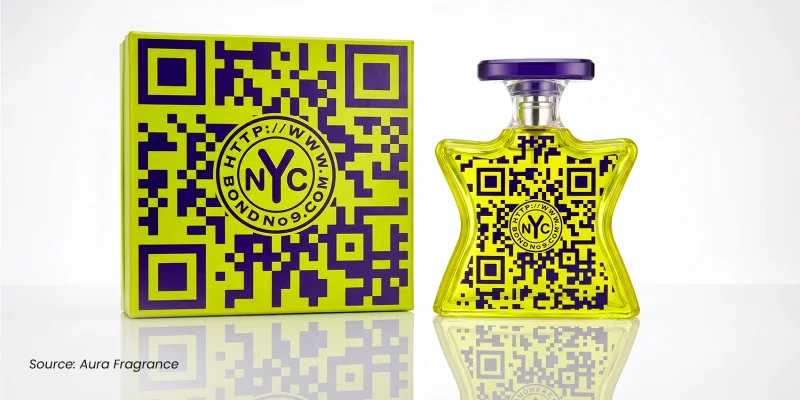
As part of the launch of its fragrance “Bond No9.com”, the brand incorporates a scannable perfume QR code with logo into the entire bottle and packaging's design. The code redirects users to a website where they can purchase the perfume online.
According to the company, the scent was inspired by the internet itself, which the brand described as a “digital village” and the world’s largest neighborhood.
With the fragrance being exclusively available online, the QR code becomes more than just a design element. The interactive perfume packaging provides a direct path for consumers to share the bottle and its scannable QR code with friends and family.
🚀Key Takeaway: QR code branding enables your code to serve as both a design element and a direct shopping destination. It’s the best tool to connect branding, storytelling, and purchasing into a single, seamless experience.
6. MicroPerfumes
MicroPerfumes, a fragrance retailer that specializes in rebottling authentic perfume and cologne samples, uses a QR code on its packaging to provide detailed product information.
Customers who scan the QR code on perfume bottles can immediately view the company’s item locator page, where they can enter the product’s 4-digit ID to access information such as fragrance names, brand, concentration, and even usage recommendations.
This system is particularly useful for MicroPerfumes, mainly since they repackage fragrances into travel-sized containers that often do not include the original labeling.
Through this QR code, they can still offer access to product information without complicating the user experience.
🚀Key Takeaway: Mini QR codes are a practical solution for centralizing all your product details in a digital hub that’s easy to access anytime, especially when packaging limits physical labeling.
7. Guerlain “Bee Respect” QR code
Guerlain’s perfume packaging includes a QR code as part of its transparency and sustainability initiative called “BEE RESPECT”, which helps customers better understand the products they purchase.
Scanning the QR code takes users directly to the BEE RESPECT platform, where they can easily view information regarding ingredient sourcing, manufacturing process, and packaging details.
This initiative was undertaken to enable the company to genuinely share its actions as part of its social and environmental commitment to sustainable practices. By using a QR code generator, Guerlain strengthens consumer trust while reinforcing its environmental efforts.
🚀Key Takeaway: QR codes for sustainability make your commitment verifiable, accessible, and actionable. They help create a direct line between product experience and verified information, reinforcing both accountability and consumer confidence.
8. Puig AILICE QR code
Inspired by Alice Through the Looking Glass, Puig introduced AILICE, an innovative technology that helps shoppers explore fragrances digitally before buying the physical product.
The experience begins when customers enter the perfume store and scan a QR code to activate AILICE.
Once they scan the fragrance QR code on the perfume bottle or its packaging, AILICE analyzes the fragrance and provides real-time information on its scent profile, olfactive family, and key ingredients.
Being aware of perfume industry digital marketing trends allowed Puig to offer a more interactive, personalized way to navigate large fragrance selections before making a purchase.
🚀Key Takeaway: Enable your customers to personalize their choices by turning passive fragrance selection into an interactive experience via QR-activated AR/VR assistants. This helps make the path to purchase feel more confident and intuitive.
What makes a perfume QR code strategy effective?
In the fragrance market, scent is vital as it is deeply personal and often tied to emotion, identity, and memory. Using a branded QR code on perfume products effectively helps brands stand out in a competitive market.
- Connects physical with digital content: Using QR codes for perfume packaging instantly connects the bottle to engaging digital content that further enhances the experience beyond the point of purchase.
- Enhances transparency and builds trust: Recent data shows that 40% of people scan QR codes to learn more about product details. Sharing information about product ingredients, fragrance composition, and bottling dates makes products more appealing to consumers and builds trust.
- Allows for better consumer engagement: 29% of people scan QR codes to get discounts or access promotions. This makes them effective tools to deliver loyalty rewards, personalized offers, and gimmicks that keep customers engaged.
- Provides measurable insights: Using QR codes lets brands track scan rates, scan times, locations, and other performance metrics, enabling better marketing optimization and clearer ROI measurement than with traditional packaging.
- Builds emotional connections: Linking QR codes to cultural heritage, virtual tour videos, or other immersive content allows fragrance brands to deepen connections with certain consumers who value narrative stories and representation.
- Combats counterfeiting: A serialized or unique QR code helps consumers verify the authenticity of their perfumes and trace supply chains, protecting brand integrity while offering legitimate buyers added value for their purchases.
- Scalable across all channels: QR codes' inherent versatility makes them effective across a wide range of media, from promotional materials to product packaging.
How to create a QR code for your perfume brand
Fragrance brands can use platforms like QR TIGER to elevate customer experiences beyond the scent of their products.
Here’s a quick step-by-step guide to creating your own customized QR code for perfume.
1. Visit our QR code generator online.
2. Select the QR code solution you wish to use. Then, choose either to use a static or dynamic QR code.
3. Fill out, copy, or upload all the necessary data for your QR code.
4. Select “Generate QR code.”
5. Customize the QR code design and include your brand logo as well as a call to action (CTA).
6. Test the QR code with multiple devices to ensure it scans correctly.
7. Download the QR code and add it to your materials or products.
Must-try perfume marketing ideas for fragrance brands
QR codes offer fragrance brands countless opportunities to create more interactive and personalized customer experiences.
Here are some more creative QR code ideas for the brands looking to use them to build stronger customer connections:
Personalized scent quiz
Engage customers with a fragrance quiz. Use a QR code on perfume packaging to lead customers to a short quiz about their fragrance personality.
After answering a few questions about scent preferences, users can receive recommendations tailored to their tastes. This creates a more engaging perfume marketing experience while helping customers discover fragrances that better match their tastes.
It can also help brands guide consumers toward specific products through quiz results, increasing engagement and conversion.
AR/VR fragrance experience
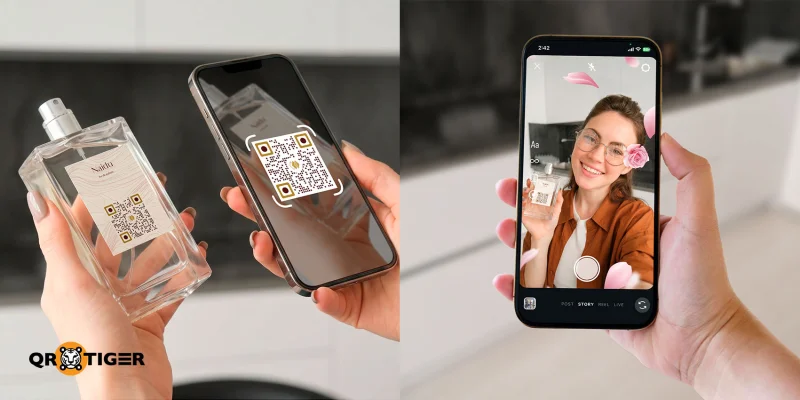
Fragrance brands can enhance their perfume marketing strategy by using QR codes to deliver unique, interactive content via augmented reality (AR) or virtual reality (VR) activation.
By scanning a QR code on a perfume bottle, consumers who bought the product can activate a custom AR filter, animation, or digital effect related to the fragrance’s theme or identity. They can take selfies and create social media content using the filter.
This approach helps combine physical products with digital storytelling in a highly shareable way.
Loyalty discounts and rewards
QR codes can also support customer loyalty programs by rewarding repeat purchases and ongoing engagement.
By placing loyalty program QR codes on fragrance packaging or designer perfume bottles, brands allow customers to earn points, unlock gifts, or receive exclusive rewards.
This incentive-based fragrance marketing campaign encourages repeat purchases by strengthening long-term customer relationships.
Exclusive teaser videos
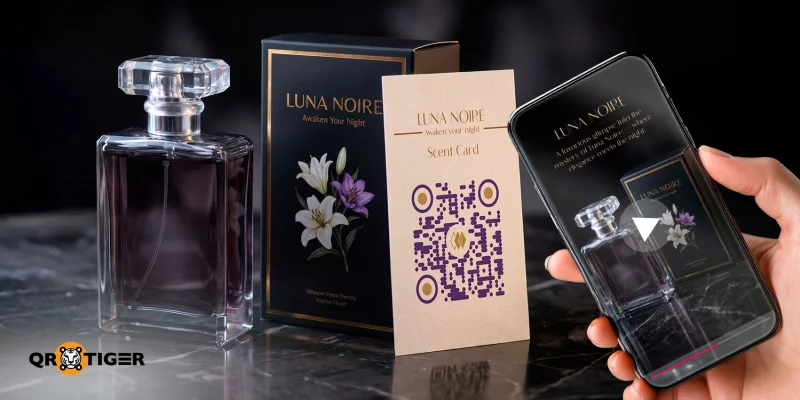
Another perfume marketing idea is to use QR codes to generate excitement for upcoming fragrance launches.
For example, brands can include scent cards inside product packaging that contain a video QR code linking to teasers and early previews of future perfume collections, helping to build anticipation for the products.
Additionally, it increases the likelihood of early purchases, as consumers feel more connected to the brand’s journey and are more excited about the next perfume release.
Feedback survey
Another practical use of QR codes is collecting customer feedback. Customers can scan QR codes on perfume packaging to rate the scent, longevity, and overall experience.
Brands can also use these surveys to involve consumers in future product development by asking users which fragrance profiles, scent families, or concepts they would like to see next, creating a stronger sense of brand participation and community involvement.
The smell of smart engagement
One thing we can learn from successful perfume QR code campaigns is that they don’t only showcase a scent. They build an emotional experience around it—one that customers can explore, interact with, and remember.
By pairing storytelling, personalization, transparency, and immersive retail experiences to QR codes, brands can extend a fragrance's legacy beyond the bottle.
You can make your perfume brand create an impact, too. Use the best QR code generator and create QR codes that offer an experience as memorable as the scent itself.
Frequently asked questions
Can perfume barcodes be faked?
Only counterfeit perfumes include fake barcodes. It’s recommended to cross-check product authenticity on the official brand’s website or purchase only from reliable sellers.
How do QR codes improve perfume packaging?
QR codes can enhance packaging by providing access to ingredients, authentication, and immersive brand stories, transforming it into an interactive, transformative digital experience without cluttering the packaging design.
What type of QR code is best for fragrance brands?
Dynamic QR codes are highly recommended for creating perfume QR codes for your brand. It allows you to update the URL even after the QR code has been printed, and to track the performance and other metrics of your brand's QR codes.
How do I check if my perfume is legitimate?
One of the best ways to check whether the perfume is fake is to look up its batch code, the printed serial number found on the perfume box (usually the bottom), and on the bottom of the perfume bottle itself. Compare them to see if they match.