
ICE and CBP Agents to Wear QR Codes on Uniforms for Identification
 By Ashley P.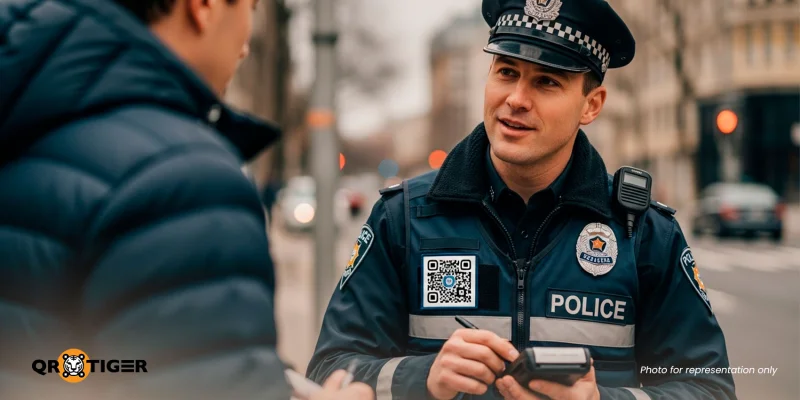
UNITED STATES — On January 22, 2026, H.R. 7233, or the Quick Recognition Act, was proposed during the 119th Congress to amend the Immigration and Nationality Act, requiring agents of the Immigration and Customs Enforcement (ICE) and Customs and Border Protection (CBP) to wear QR codes on their uniforms for quick identity verification during operations.
“There is an urgent need to unmask ICE not only physically but digitally,” says New York Rep. Ritchie Torres. “So I have legislation that would require ICE agents to wear uniforms that contain QR codes, which can be scanned by members of the public.”
Two fellow Democratic Representatives, Darren Soto of Florida and Shri Thanedar of Michigan, have also co-sponsored Torres’s bill. Torres’s office also released a statement, stating, "This legislation would modernize identification standards for federal immigration enforcement officers and improve transparency during enforcement encounters."
Table of Contents
The bill has been referred to the Committee on the Judiciary and the Committee on Homeland Security
With this bill, officers and employees of the U.S. Immigration and Customs Enforcement (ICE) and U.S. Customs and Border Protection (CBP) are required to wear a scannable QR code created on a reliable QR code generator while performing law enforcement or immigration enforcement activities.
When scanned, the code will redirect scanners to a publicly available Department of Homeland Security (DHS) website, where the agent’s information can be found, including the officers’ names, badge numbers, agencies, operational units, and active statuses. Photographs of the agents are also being considered.
“Keep in mind, officers have a responsibility to identify themselves to the public. And scanning a QR code is much safer than asking for a physical ID,” Torres said in relation to the bill.
In addition to information on the officer, users would also have access to a secure complaint form for reporting incidents. Citizens who scan the QR code will also be able to see the number of complaints filed against the officer.
With increasing scrutiny of arrests and law enforcement operations by both ICE and CBP, this QR code allows citizens, both online and offline, to identify agents during their operations and report any unfair treatment to the proper authorities.
Quick recognition amid heightening tensions with the public
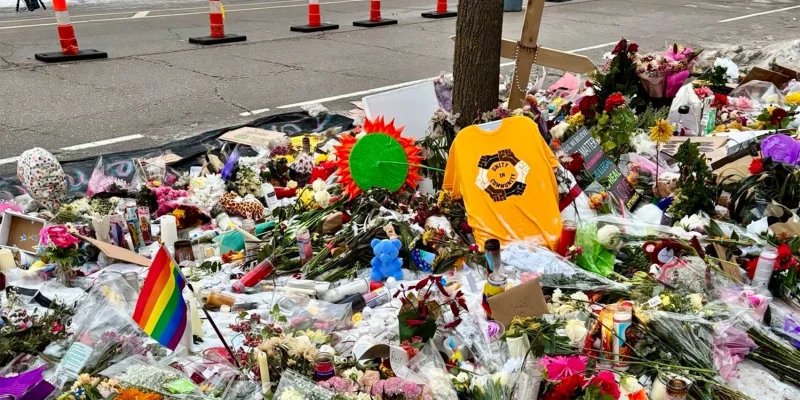
Flowers and candles on a street memorial for Renee Nicole Good on January 11, 2026. (Source: Amy Klobuchar/Instagram)
The introduction of H.R.7233 follows the fatal shooting of Renee Good by an ICE agent named Jonathan Ross on the 7th of January, 2026. Occurring in Minneapolis, Minnesota, Good was shot by the agent, who was wearing a mask as seen in body camera footage, after ICE stopped her vehicle.
According to Homeland Security Secretary Kristi Noem, the shooting was done in self-defense after Good allegedly attempted to run Ross over. However, this was heavily disputed by local and state officials. Democratic officials also urged the public to refer to other videos that captured the incident.
Another high-profile shooting occurred a week later, when a federal agent shot a man in the leg after being attacked during an arrest. While the victim, believed to be a Venezuelan who was in the US illegally, was stable and in custody, the shooting drew a crowd of protestors. This eventually led to a confrontation between federal officers and demonstrators.
Varied reactions across the board
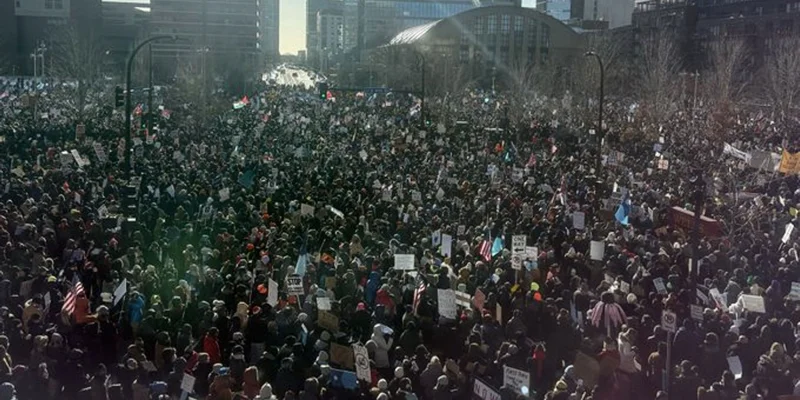
Anti-ICE protesters in Minneapolis on January 7, 2026—seconds after Renee Good was killed. (Source: Matt Lavietes/Threads)
Across the country, support for abolishing ICE has risen sharply. According to Civiqs data, 46% of respondents support abolishing ICE as of January 26, 2026, up from 25% a year prior.
Meanwhile, a YouGov snap poll conducted on the same day as the Good shooting found that 52% of respondents disapproved of how ICE was performing its duties, while 39% approved.
In defense of ICE, DHS Assistant Secretary Tricia McLaughlin released an emailed statement to news magazine Newsweek, saying, "We aren’t going anywhere. President Donald Trump campaigned on immigration enforcement, the American people voted for it, and Secretary Noem is delivering."
Despite the bill’s goal of increasing transparency and ensuring public safety, social media users have identified issues with QR codes in this context.
Digg users, for example, pointed out that a small crease or scratch could lead to QR code scanning problems for many. Another user also noted that QR codes can be tampered with using a marker.
Users on Threads voiced similar sentiments, with one pointing out how unreliable this method of identification can be, referencing incidents of ICE swapping license plates during their operations. Many more explained that citizens might not even be able to scan the QR code if they are being apprehended by agents.
Still, a few users support the bill, with one user on Reddit calling it a “fantastic idea.”
QR codes as a tool for enforcing safety and transparency
According to Torres, “The act of asking for a physical ID creates an encounter that can escalate into violence.” With increasing calls for accountability from law enforcement, the use of QR codes will allow the agencies involved to maintain transparency without citizens interfering with their operations.
The decision to use QR codes is driven by the technology’s ability to deliver digital information to users at a moment’s notice.
However, as noted by internet users, several issues arise when considering the practical applications of the idea. Regardless, identification is integral to transparency, and QR codes are among the best tools to enforce it. 
This article is for general informational purposes only and does not constitute legal, financial, or other professional advice. For questions about QR TIGER's products or services, please contact our support team at [email protected].
Was this article helpful?
Maximize Scans with the Best QR Code Generator
Join thousands of global brands using QR TIGER to manage dynamic routing, bulk creation, and deep attribution analytics.
Get Started For Free