
Pakistan Pushes Cashless Economy Through QR Code Payments
 By Ashley P.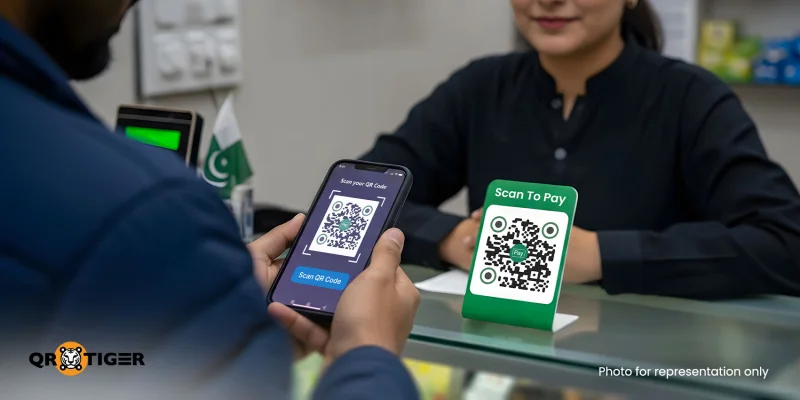
PAKISTAN — On January 25, 2026, Pakistan’s federal government mandated retailers nationwide to provide a QR code for payment transactions. This includes the capital city of Islamabad and all provinces in the country.
According to the Minister of State for Finance, Bilal Azhar Kiani, these executive orders are part of an initiative to reduce the country’s reliance on cash payments, commonly referred to as the government’s “Cashless Pakistan” program.
It is also a major step toward finally formalizing retail transactions, curbing tax evasion, and strengthening documentation practices, making it safer for customers and traders alike.
Both federal and provincial governments are also creating additional legislation and support for the rollout of necessary digital payment systems.
Table of Contents
The shift to Cashless Pakistan
The push for digital payment options at retailers is primarily motivated by the “Cashless Pakistan” initiative. It is a move to reduce the country’s reliance on cash, promote financial transparency, and strengthen the digital economy.
By integrating cashless options, mainly QR code-based systems, officials say that the decision will make shopping more convenient for customers. The move is also expected to help combat tax evasion and weak disclosure practices enabled by the country’s heavy reliance on cash, as well as improve the monitoring of unregistered businesses.
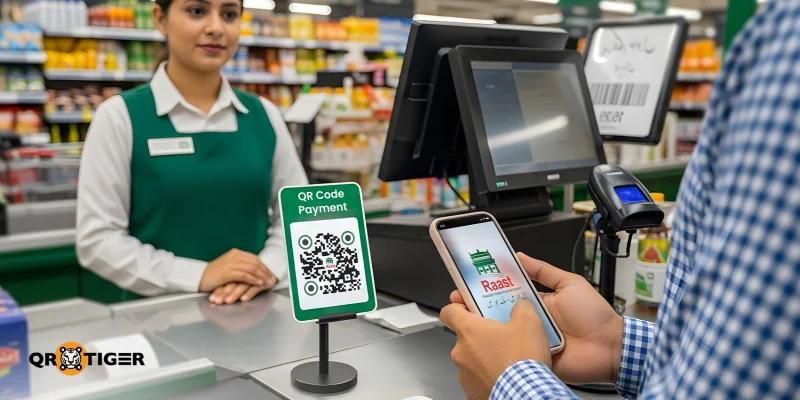
Pakistan already has its own cashless payment system, the Raast QR codes. Known as “Raast” or “direct way,” it was launched in 2021 after being developed over several years through a collaboration between the State Bank of Pakistan (SBP) and the Bill & Melinda Gates Foundation.
The Raast QR code system was rolled out in three phases, ending in 2022. Participating banks integrated a QR code generator into their systems, enabling users to generate their own Raast codes at their convenience.
In 2025, the SBP developed a national implementation strategy to increase the availability of its QR code infrastructure across all retail and commercial outlets. As of November 1st of the same year, 38,819 retail stores accept payments through Raast QR codes through partner banks.
Government agencies have also integrated Raast QR payments through their services. The National Database and Registration Authority (NADRA) has done so through its service centers and its identity issuance service app, PAK ID.
As of 2025, Raast QR payments account for 10% of cashless transactions through the app. Servicing a consumer base estimated at about 27.2 million, the annual potential for digital payment collection through PAK ID is expected to be Rs28.47 billion.
Challenges to a digital economy
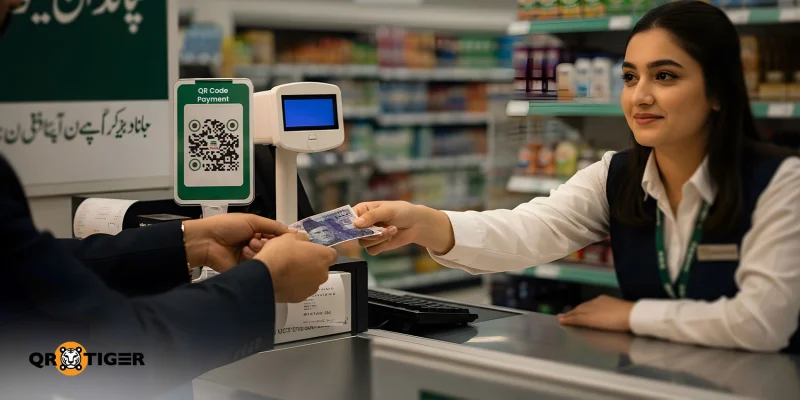
While the Pakistani government has made several moves to promote a digitalized economy, there are still a few hurdles to overcome.
For starters, the SBP found that, despite a rapid adoption of digital payment options, cash remains the primary means of transaction in Pakistan’s economy. In the 3rd Quarter of Fiscal Year 2024-2025, digital payment channels accounted for only 29% of total payment value, while the remaining 71% were made through over-the-counter channels.
Secondly, according to the World Bank, only 27% of Pakistan’s population uses the internet. This leaves 73% of the country unable to access the digital economy at all, hindering the government’s efforts
Slow internet speeds and fluctuating phone connections are another challenge the government faces, as retailers and consumers struggle with digital payments.
Suhail Safdar, a vendor of toys, shared with Arab News, “There is a huge issue of [the] Internet. [The] Internet is not working here. The customers who come here, when they send money, we go outside and hold out our mobiles, but it still doesn’t work.”
The prime minister's primary countermeasure is to install free Wi-Fi at locations where patchy connectivity is hampering digital transactions.
Lastly, financial illiteracy remains an issue in the country. A 2025 study from the Institute of Business Administration Karachi found that 26% of adults were financially illiterate. This makes citizens less likely to use digital platforms for financial transactions.
QR codes as a driving force in a digital economy
On November 10, 2025, during a meeting to review progress on government initiatives, Prime Minister Shehbaz Sharif directed the relevant authorities to intensify campaigns in rural areas to accelerate the transition to a fully digital financial system.
“The entire world is moving towards a digital economy, and Pakistan must move forward alongside it,” the prime minister said at the time.
As the SBP found, digital payment options are rapidly being adopted, even as consumers still prefer paying in cash, so it’s safe to say the country is moving forward as planned.
While the country still faces other obstacles, the recent requirement of digital payments demonstrates the government's commitment to a cashless society through QR codes. 
This article is for general informational purposes only and does not constitute legal, financial, or other professional advice. For questions about QR TIGER's products or services, please contact our support team at [email protected].
Was this article helpful?
Maximize Scans with the Best QR Code Generator
Join thousands of global brands using QR TIGER to manage dynamic routing, bulk creation, and deep attribution analytics.
Get Started For Free