How QR Codes for Voting System Improve Election Processes

How QR Codes for Voting System Improve Election Processes

The use of QR codes for voting system has been an effective means for improving voter convenience and maintaining a verifiable, auditable record of every vote, as proven by various voting precincts and electoral institutions around the world.

From verifying eligible voters to organizing polling stations to counting votes accurately, these complex operations require a system that is efficient and transparent, which QR code technology is able to support.

Learn how QR codes are transforming voting systems and building a more secure, efficient, and transparent democratic process.

Table of Contents

    1. How do QR codes for voting systems work?
    2. Advantages of integrating QR codes in the voting system
    3. Learn to create a QR code for elections
    4. Real-life use cases of QR code voting systems in the USA
    5. Notable uses of voting system QR codes in other countries 
    6. Enhance your voting system with QR TIGER 

How do QR codes for voting systems work?

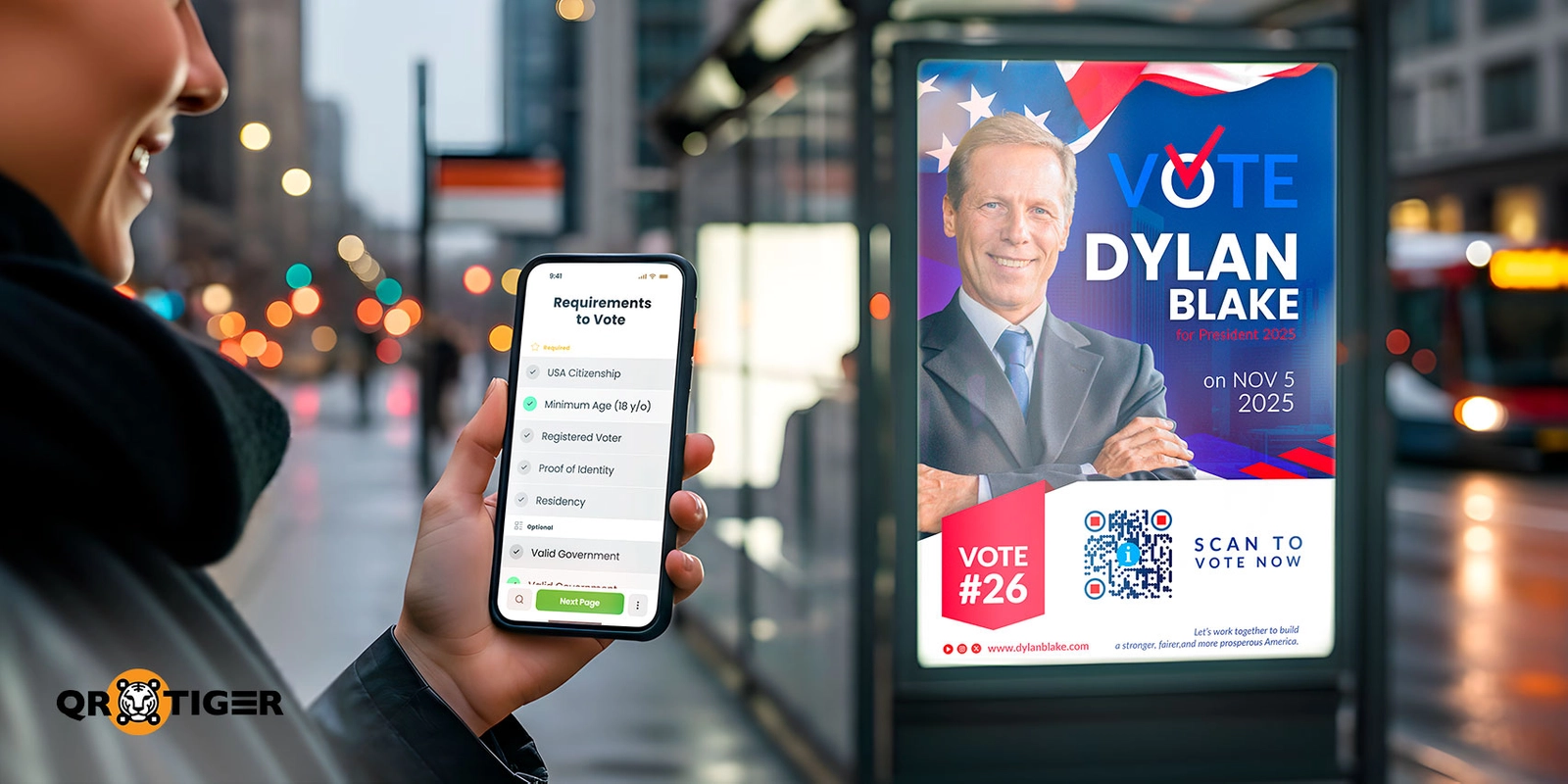
QR codes were never just for menus and product packaging. Governments and organizations widely use an election QR code to promote a convenient and secure method to access relevant details about the voting system.

At the Nye County Election Commissioners’ assembly, retired Army Colonel Phil Waldron emphasized the importance of strong anti-counterfeit measures in elections. He suggests that using QR codes could be part of the solution.

A QR code made using a reliable QR code generator is able to embed various types of information and quickly display it when scanned by an electronic device like laptop or smartphone.

This allows election officials to securely store and access crucial election details, ranging from voter identification, voting guidelines, and sample ballots to official voting platform links and election results.

A QR code-based voting system helps improve transparency by allowing the electorate and ordinary citizens to scan and see crucial information that should be known to the public.

Advantages of integrating QR codes in the voting system

These are the key ways of how QR codes transform modern voting systems and the added benefits they bring.

Reminder: Only scan a QR code provided by official electoral institutions. If you find the QR code suspicious, immediately report it to the police or cybersecurity agency.

Speed up the voter registration process

QR code for voting system

Voting system QR codes make electoral processes more efficient, saving both administrators and voters valuable time and effort.

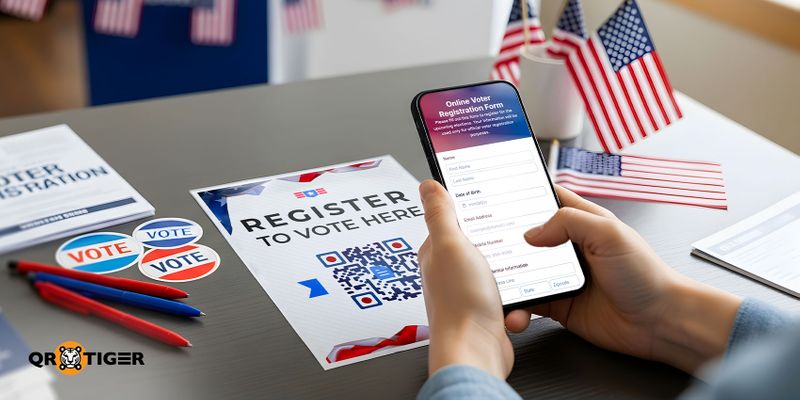
Election offices can embed their official online registration portals into a QR code and post it on their official pages and information boards. 

With this, they no longer have to require people to drive and visit these offices, as they can quickly register through their mobile devices. 

Using QR codes also solves common issues like mistyped web addresses or opening unverified webpages that may contain malicious software that steal personal and financial information. 

By displaying or sharing a QR code for voter registration to the public, election officials provide people a smoother way to become eligible voters and help boost their confidence to participate in the whole election process. 


💡Fast Fact: In a recent study by the Journal of Theoretical and Applied Information Technology (JATIT), researchers highlighted the impressive performance of QR codes when used as an online voting system.


In controlled tests, QR code generation and verification were completed in just over a second, resulting in an overall system efficiency rate of about 97.24%.

Promote transparency and vote security

Beyond providing more efficiency, QR codes play a key role in providing a transparent and verifiable voting process.

The country of Estonia facilitates online voting through its official QR code voting app, which allows users to generate a unique receipt with a QR code that verifies their ballot submission.

Eligo’s voting system website also takes transparency a step further, allowing constituents to easily track every interaction using encrypted QR codes, creating traceable data flows and auditable logs.

In a large-scale national election, this approach can help reduce result errors and minimize exploitation risks, ensuring transparency for millions of voters.

Share election-related documents conveniently

QR code for voting system info

Turning a PDF to QR code instead of sending election-related documents via email or manual distribution allows electoral commissions to give voters and staff instant access to critical voting information anytime, anywhere. 

By scanning the QR code posted on a city or community’s information boards, users can instantly open or download the files on their smartphones.

With this approach, voter authentication forms, candidacy requirements, tabulation sheets, and the like can be shared effortlessly. 

This also makes communication faster, improves coordination between offices, and strengthens the overall integrity of election operations.

Ease vote counting

Election offices can create QR codes in bulk to save time and reduce the manual work needed to count votes.

With each voting system QR code linked to an individual ballot, administrators can instantly access and record voting data with a quick scan, which eliminates much of the manual work involved in tallying votes.

Not only will this method boost accuracy and efficiency, but it also serves as a reliable backup for verifying results from automated counting machines. 

Keep confidential voting information secure

QR codes also play a key role in protecting the confidentiality of ballot information. 

By relying on advanced and secure QR code software, sensitive voting data can be easily encrypted and stored behind password-protected QR codes, ensuring that only authorized personnel can access it.

This added layer of security helps maintain voter privacy while preventing unauthorized access or tampering of votes throughout the election process.

Enhance election accessibility 

QR code for voting system aid

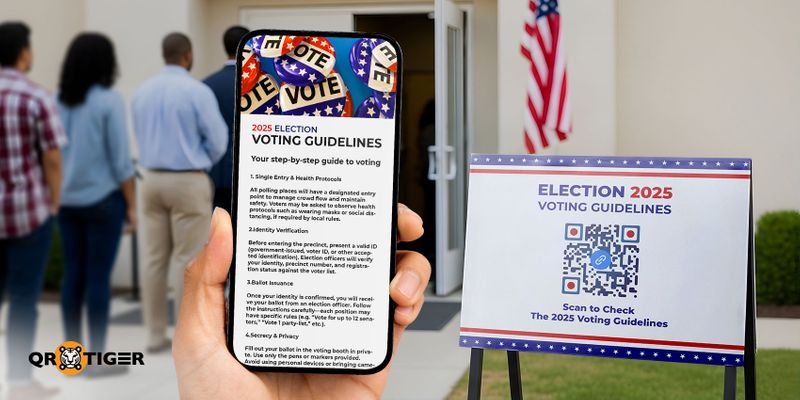
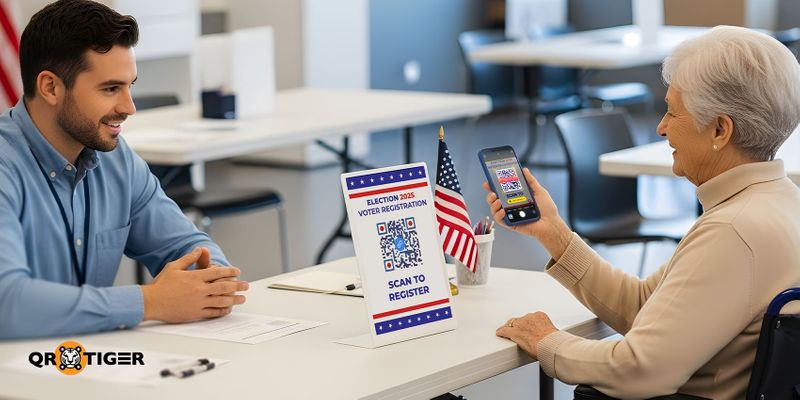
Accessibility is a crucial part of any fair voting system, and QR codes make it easy for voters to access information about registration, polling locations, and even last-minute election updates from their mobile devices.

According to a 2024 report by the International Foundation for Electoral Systems (IFES), voting system QR codes are increasingly being used to improve accessibility and security for all voters, particularly those with disabilities.

For people with visual impairments, QR codes can help bridge the gap by linking to screen-reader-compatible pages, audio instructions, or large-font versions of essential documents.

Those with hearing and speech impairment can access sign language videos as well through the QR codes.

By combining accessibility, security, and efficiency, QR codes help transform the voting experience into one that is inclusive, transparent, and equitable for everyone.

Reach voters right on their mobile devices

According to a study done by the Pew Research Center, more than eight in ten Americans (86%) get news from their digital devices.

This means that the majority of voters (especially those in younger demographics) will rely on their smartphones or other digital devices to learn about recent election news and announcements. 

By using QR codes, which are specifically a mobile-first technology, the electoral commission can easily bridge that gap by directing users to a central information hub that keeps all election news in one convenient location.

This approach not only allows information about the election to reach a wider audience, but it also helps reduce voter confusion by offering them the info directly to their mobile device.

Learn to create a QR code for elections

Here’s how you can create a QR code you can use in a voting system:

1. Visit the best QR code generator with logo integration. 

2. Choose the QR code solution that fits your needs.

3. Fill in the required data in the space provided

4. Select the dynamic QR code. 

5. Tap on the Generate QR code button.

6. Customize the QR code. Add a logo for professionalism and legitimacy.

7. Download the QR code and print on election materials.

Real-life use cases of QR code voting systems in the USA

Besides marketing and business, small-scale and large-scale elections are also starting to incorporate QR codes for their voting system. 

Below are some real-world QR code voting systems in the USA (United States of America):

League of Women Voters QR code for voter registration

League QR code for voting system

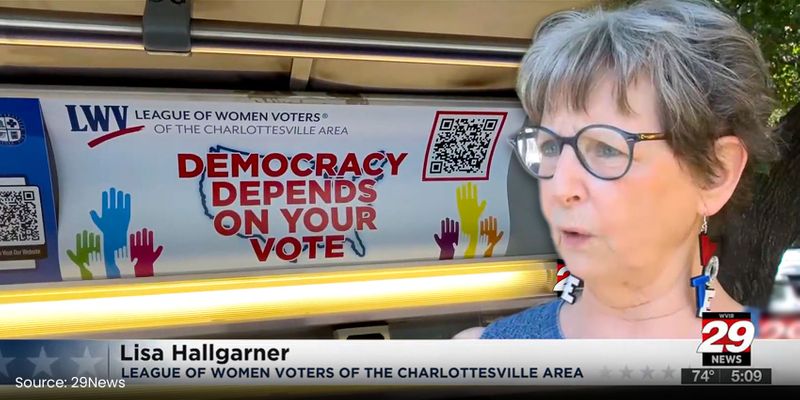
The League of Women Voters, a Charlottesville-based voting advocacy group, has adopted a free QR code voting system to help make voter registration easier and more accessible.

This initiative aims to encourage higher voter participation by simplifying the registration process through everyday technology. 

To reach a wider audience, the group displayed special “Register to vote” QR codes inside Charlottesville Area Transit (CAT) buses, allowing commuters to scan them easily using their smartphones.

Scanning the QR code instantly redirects users to Virginia’s official voter registration page, enabling citizens to register and download their Voter’s ID QR code quickly and conveniently from their mobile devices.

Georgia’s 2024 QR code ballot audit

In November 2024, Georgia released the results of a comprehensive ballot audit from the state’s General Election, which was conducted across all 159 counties. 

The audit reviewed more than 5.2 million ballots cast using Dominion Voting Systems’ tabulators, which found a 100% accuracy rating for QR-coded ballots generated by the Dominion ImageCast X devices.

Using Enhanced Audit software, officials compared the human-readable text on each ballot with its QR-encoded version and found that every single QR-coded vote matched perfectly.

Of the millions of ballots reviewed, only 87 showed discrepancies, and all of them were caused by human interpretation errors on hand-marked paper ballots, not by the QR system itself.

Georgia Secretary of State Brad Raffensperger emphasized that this audit reaffirms the state’s commitment to secure and verifiable elections, highlighting how technology can build trust rather than undermine it.

“Warriors Rock the Vote” QR codes for student participation

Student QR code for voting system

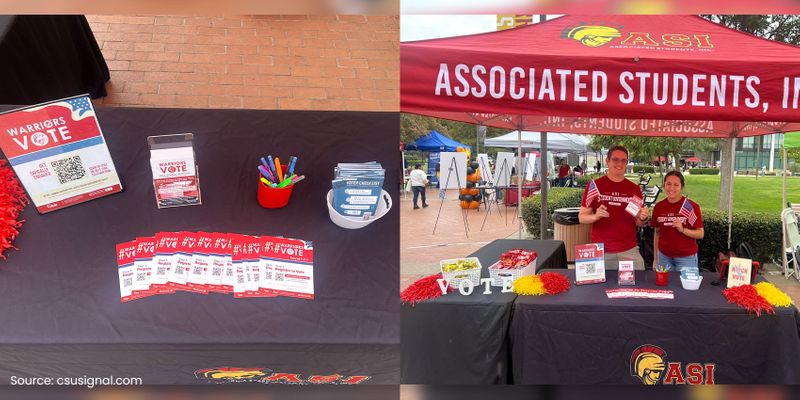
In 2024, the Associated Students, Inc. of California State University hosted its “Warriors Rock the Vote” event with the aim of educating students about voter rights and making voter registration easier.

To simplify the process, they printed voting QR codes on flyers that linked directly to California’s official website, allowing students to check their voter registration status, sign up to vote, or learn more about the candidates.

This simple yet effective use of QR codes for voter education made civic participation fast, accessible, and interactive. 

Some students even praised the setup, noting how easy it was to find everything they needed to cast their votes confidently.

These small, scannable codes bridged the gap between awareness and action, helping students stay informed and engaged throughout the election season.

Henry Ford Health QR codes to encourage doctors to vote

A study published in the Journal of Graduate Medical Education showcased how Henry Ford Health (HFH) in Michigan used a simple, low-cost QR code campaign to boost voter participation among its graduate medical trainees. 

With physicians historically voting 6–14% less than the general population, the initiative aimed to make voting more accessible for busy healthcare professionals.

During orientation and routine educational sessions, HFH distributed wearable buttons printed with QR codes linking to Vot-ER, a trusted platform that helps users check registration status, register to vote, and request mail-in ballots.

The “scan-to-vote” QR codes served as quick, nonpartisan reminders that encouraged medical trainees to vote on their own time.

Despite minimal resources, the results were still impressive. Among eligible respondents, 43% reported voting or planning to vote, compared to the 23% of statewide turnout.

This initiative demonstrates how small-scale, affordable innovations can lead to meaningful improvements in voter engagement and accessibility across different communities.

Los Angeles County QR codes for voting

Los Angeles County’s Voting Solutions for All People (VSAP) is a great example of how a QR code for voting system can make elections smoother and more secure. 

Launched in 2020, VSAP replaced the county’s old voting system with modern touchscreens called Ballot Marking Devices (BMDs) that let voters make their selections easily, and then print out a paper ballot as the official vote record.

An advanced QR code software helps keep this system fast and reliable by activating ballots and encoding vote selections for quick tallying. 

An optional QR code poll pass also lets voters pre-mark choices on their phone and scan them at a Vote Center.

While some critics worry about QR code transparency, election officials emphasize that the regular audits and certifications back up the system’s integrity.

VSAP shows how QR codes can modernize voting without sacrificing trust or inclusivity, making it easier for everyone to cast their ballot with confidence.

Notable uses of voting system QR codes in other countries 

Several other countries are adopting QR code technology to improve their election systems, making voting more secure and efficient.

These countries have notable use cases of QR codes, with real impact on how their elections are run.

Australia (ACT)

In the Australian Capital Territory, elections get a tech twist with the eVACS system, which handles both electronic voting and vote counting.

Voters can choose to vote the classic way with paper ballots or go digital using an e-voting card printed with a QR code. The QR code identifies the electorate and polling place but contains no personal details, keeping votes secure and forgery-free.

Once scanned, it lets voters cast their ballots on a touchscreen. The system also counts votes electronically under the Hare-Clark method. eVACS is regularly audited for security and accuracy, giving ACT voters confidence that their digital ballots are in good hands.

Costa Rica

Costa Rica added QR codes to provisional voter lists, letting citizens easily check their registration details.

Provisional voter lists were displayed at Fuerza Pública offices during the 2022 parliamentary elections. Voters abroad can register online with documents like ID photos and fingerprints. QR codes connect electronic and paper records, keeping the process secure.

This QR code system is part of a larger electronic framework overseen by the TSE (Tribunal Supremo de Elecciones or Superior Tribunal of Elections).

Mexico

Mexico’s Internet voting system for citizens abroad uses QR codes for identity verification. After voting, a special code confirms ballot storage.

QR codes also play a key role in the INE Quick Count and Preliminary Electoral Results Programme (PREP) systems, ensuring timely updates and transparency.

Singapore

Singapore’s Elections Department (ELD) recently introduced QR codes in its postal voting system, aimed at simplifying the voting process for overseas citizens while enhancing security.

These QR codes, found on return envelopes, prevent double voting and help verify legitimacy of ballots. Paired with Singpass for identity checks, they make sure transparency and security.

Philippines

The Commission on Elections (COMELEC) uses QR codes to simplify pre-voting enrollment for overseas voters. Registered Filipino voters abroad can scan a QR code or visit the enrollment link to sign up for the 2025 National Elections.

This system makes sure easy access while keeping the process secure, though the link is geo-blocked for users inside the Philippines.

QR code helps overseas voters quickly check their registration status and stay connected to the election process.

India

India uses QR codes for voter registration verification and quick access to polling info.

Voters can verify their registration status and access polling information via the National Voters’ Service Portal (NVSP) and the Voter Portal.

Additionally, voter slips now feature QR codes, making it easier to confirm identities at polling stations.

On election day, election officers use the Booth App to confirm voter identities. This handy app scans an encrypted QR code from Photo Voter Slips, helping to prevent multiple voting and making the identification process smoother.

The Booth App is connected to the Election Commission of India (ECI) central server, helping officials verify voters instantly, reducing fraud and improving the flow.

Ukraine

Ahead of the 2020 local elections, Ukraine’s Central Election Commission (CEC) introduced QR codes on voter education posters.

These codes are linked to audio and sign language content, providing easy access to voting procedures and COVID-19 safety measures.

With over 29,000 polling stations displaying these posters, the QR codes offered a low-cost, accessible solution to reach more voters, especially those with disabilities.

The initiative earned the CEC the Innovative Practice Award from the Zero Project in 2022 for making elections more inclusive.

Enhance your voting system with QR TIGER 

The use of QR codes for voting systems marks a major leap toward making them more secure, efficient, and accessible for everyone. 

By modernizing voter registration, improving transparency, and simplifying information dissemination through QR codes, electoral institutions are able to address many long-standing challenges in the electoral process. 

QR TIGER QR Code Generator is built with innovative and scalable solutions that help pave the way for election systems around the world to become more transparent, reliable, and truly democratic.

Book a demo with our team of experts today to get started.Brands using QR codes