
QR codes for marathon events shorten registration lines, simplify bib pickup, replace tickets, and deliver post-race photos. Runners scan with a phone, and staff skip the paperwork.
9 Ways to Use QR Codes for Marathon Events in 2026
 By Roselle V.
Table of Contents
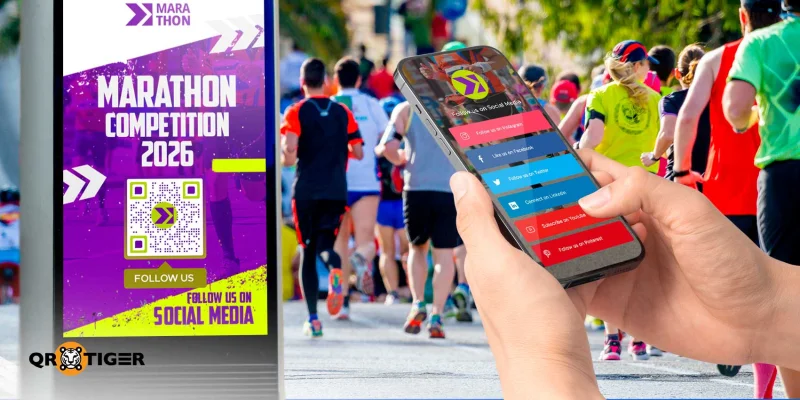 Social media QR code links runners and spectators to your event's social channels in one scan.
 Print these on bib backs, expo signage, sponsor booths, and water station banners. During the race, spectators scan to follow live updates. Or after the race, runners scan to tag the event in their finisher posts.
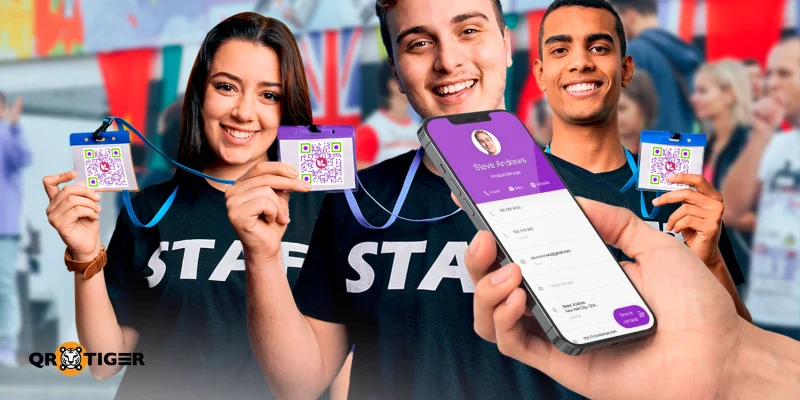
This way, people instantly access and save their information for faster contact.
You print vCard QR codes for each staff member and create a QR code identification system or an attendance tracker.
Attendees can also scan these codes to contact the staff if they need assistance.
You also add vCard QR codes to marathon runners' bibs so they can network with each other during the event.
Bib QR codes also serve a safety role. As early as 2014, the Fox Cities Marathon in Wisconsin used a QR code to access a personal health record containing emergency contacts, medications, and allergies.
Medical officials scan the code if a runner needs help, and the code is disabled after the race for data security.
9. WiFi QR code
Race venues strain phone signal. Expo halls fill with thousands of bodies, kit collection drags on for hours, and recovery zones jam up with selfie crowds after the race. Most runners lose their cellular bars right when they want to upload finish-line photos.
A WiFi QR code solves this in one scan. Runners point their camera, the phone connects, and the password problem ends.
The QR code stores your SSID, password, and security type (WPA or WEP). Print it on signage at registration, sponsor booths, hydration stations, and media tents.
Pair the code with a short call to action like "Connect, then visit our booth for race-day promos." That single line turns a utility scan into a marketing handoff.
How to create QR codes for marathon events
Step 1: Visit the QR code generator website and log in.
Step 2: Select a QR code solution that best suits your race event.
Step 3: Choose a QR code type: Static or Dynamic QR.
Step 4: Enter the required information, then click Generate QR code.
Step 5: Customize your QR code. Add your race logo and pick colors matching the event branding. Include a call to action like “Scan to Register” or “Scan for Course Map”.
Step 6: Scan the QR code to confirm it works.
Step 7: Download in SVG for high-resolution print on bibs, signage, and race kit materials.
Note: After adding the QR code to your printed materials, test it in bright and indoor lighting to mirror race-day conditions.
Also read: How to Create and Use QR Codes for Events
| Editability after printing | Scan tracking and analytics | Data capacity and pattern density | Scan reliability with damage | Cost over the race calendar | |
| Static | None. Once printed, the destination is locked. One wrong destination means a reprint. | No data. You print, scan, and never know the scan counts, locations, and times. | Limited. Bigger data builds denser patterns. Harder to scan at small print sizes or in motion. | Lower. Dense patterns lose readability if mud, sweat, or tearing covers 15% of the code. | Free to generate, but you reprint every time content changes. Reprint costs stack across multiple races per year. |
| Dynamic | Edit anytime. Update link without changing the printed code. | Full scan logs. Scan counts, time, location, heatmap, and device type per scan. | Stores a short URL. Pattern stays clean and scannable, even at the bib size. | Higher. Cleaner patterns plus high error correction survive 30% damage and still scan. | Subscription or plan pricing, but one print covers years of edits. Lower total cost for organizations running repeat events. |
Dynamic QR codes hold 64.92% of the QR code generator market in 2025, per Mordor Intelligence. Dynamic isn’t only better for race events, it’s the industry default.
Static QR codes hold a narrow spot for evergreen, never-changing destinations. Most marathon use cases call for dynamic.
How do you choose the best QR code generator for events?
A QR code generator built for restaurant menus often falls short here. Race events demand volume, weather durability, and live-tracking from day one.
Here’s what matters:
Dynamic over static
Static QRs are fine for a one-and-done coffee shop menu. They fail the moment your course changes, the weather shifts, or you need to update a sponsor link mid-event.
Dynamic QRs let you edit the destination after printing. For marathons, this is non-negotiable.
Bulk generation
A 5,000-runner race also needs 5,000 e-bibs, 5,000 certificates, and 5,000 personalized post-race links. Manual creation is off the table.
Look for bulk QR code generation through CSV upload. The right tool produces thousands of QR codes in one batch tied to a runner's data.
Scan analytics
Static QRs don’t provide data. Dynamic QRs give you scan counts, time, location, and device type for every interaction. For a race director, this answers real questions.
Which water station hit peak scans? Did the sponsor banner at Mile 18 get any traction? Did people scan the post-race photo link on Sunday night or Monday morning?
Print quality and durability
Race-day QR codes face sun, sweat, rain, and in the runner’s pocket. Pick a QR code generator with logo integration that has a high-resolution SVG download. PNGs blur when printed at large sizes for course signage.
Also, confirm the generator supports high error correction. This lets the code scan even when 30% of the pattern is damaged. Mud, ink smudge, a sweat-soaked bib pocket? All survivable.
Security and data protection
Race registration collects names, emails, emergency contacts, and sometimes medical info. The generator behind your QR codes sees this data, especially with dynamic links.
Look for ISO 27001, SOC 2, SSL, and GDPR compliance. Remember, security isn’t optional.
Integration with race platforms
The serious time-savers integrate with the tools you already use. If your generator has an API or direct integration, you skip the export-import entirely.
Pricing that fits race size
A community 5K and the Boston Marathon don’t share the same budget. A flexible generator offers a freemium tier for small races and scaled plans for larger events.
Watch out for per-scan pricing on dynamic QRs. At marathon volume, this adds up fast.
Make QR codes work for your next marathon
QR codes are now standard marathon event technology. QR codes for marathon events solve specific race-day problems. Pick the QR code solution that matches your event.
Test on a small event before scaling to a major race. Your choice of the best QR code generator matters more than any single design choice.
QR codes don’t replace your team. They free up your team to focus on the work that needs a person, like helping injured runners, adjusting sponsor materials, and guiding first-time volunteers through their shifts.
QR codes handle the predictable, while your team handles everything else.
Try it at your next event
Want to test this out? QR TIGER offers a free tier for generating QR codes on a single event. Sign up now, run a small-scale test on registration, and see how it fits your team’s workflow before you scale up.
FAQ
What size should a QR code be on a marathon bib?
At least 1 x 1 inch for bibs. A QR code viewed from 10 feet needs about 10 inches square. Remember, divide the scan distance by 10 to get the minimum size.
Do QR codes expire after a race?
Static QR codes never expire. Dynamic QRs stay active as long as your subscription is active. Keep subscriptions paid through your post-race delivery window.
Do spectators need an app to scan a QR code?
No. Every iPhone and Android since 2017 scans QR codes through the built-in camera.
Do QR codes work without internet?
Yes, if the code stores the data directly. Static codes such as text, SMS, and WiFi credentials work fully offline.
How much do QR codes cost for a marathon event?
Free to over $35 per event. Static QR codes are free, while dynamic codes start at $5 to $35 per month.
Do QR codes replace RFID chip timing at marathons?
No. RFID auto-triggers at timing mats for official race times. QR codes need a deliberate scan, so they fit pre- and post-race. Most major marathons use both.

Disclaimer
This article is for general informational purposes only and does not constitute legal, financial, or other professional advice. For questions about QR TIGER's products or services, please contact our support team at [email protected].
Frequently Asked Questions (FAQ)
What size should a QR code be on a marathon bib?
At least 1 x 1 inch for bibs. A QR code viewed from 10 feet needs about 10 inches square. Remember, divide the scan distance by 10 to get the minimum size.
Do QR codes expire after a race?
Static QR codes never expire. Dynamic QRs stay active as long as your subscription is active. Keep subscriptions paid through your post-race delivery window.
Do spectators need an app to scan a QR code?
No. Every iPhone and Android since 2017 scans QR codes through the built-in camera.
Do QR codes work without internet?
Yes, if the code stores the data directly. Static codes such as text, SMS, and WiFi credentials work fully offline.
How much do QR codes cost for a marathon event?
Free to over $35 per event. Static QR codes are free, while dynamic codes start at $5 to $35 per month.
Was this article helpful?
Maximize Scans with the Best QR Code Generator
Join thousands of global brands using QR TIGER to manage dynamic routing, bulk creation, and deep attribution analytics.
Get Started For Free