11 Tech-Savvy Ways to Use a Bill of Rights Day QR Code
 By Kathrine C.
 Reviewed by Blessie Rae, Copy Editor
Overview
|
Innovative ways to celebrate Bill of Rights Day with QR codes
Here are 11 practical ways that schools, museums, government agencies, and civic organizations can use QR codes to make Bill of Rights Day more engaging:
1. Social studies lesson
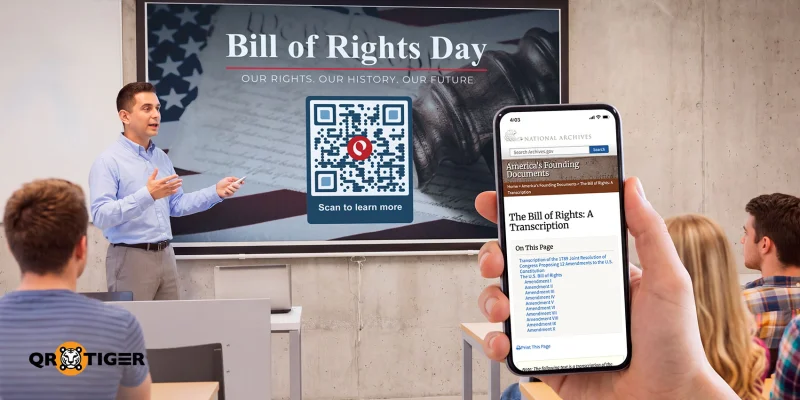
A social studies teacher can convert files into QR codes to give students direct access to readings, historical documents, videos, and other educational materials about the creation of the Bill of Rights.
Divide students into groups and provide each one with a different QR code to scan. The codes can lead to different resources on a specific amendment or topic related to the Bill of Rights, which they must use to create a presentation.
It makes group work much more interesting and interactive, as students can easily review the materials, discuss what they learned, and present their findings to the class.
2. Bill of Rights original source text in PDF
The original source text of the Bill of Rights list can be made more accessible through a QR code.
Use a PDF QR code to directly lead people to a downloadable copy of the document. They can easily read through or save it on their smartphones to read later.
Place the code on classroom posters, library materials, or even public information boards.
3. Bill of Rights Day events
Hosting a Bill of Rights-themed competition or event is a great way to turn historical facts into an interactive activity.
Using an RSVP QR code, participants can quickly sign up for contests and other Bill of Rights-themed events simply by scanning it. They can also add the schedule and venue details directly to their calendar after scanning.
4. Public forum
Government organizations and institutions can host a public forum for Bill of Rights Day, where the community can come together to ask questions and share suggestions on addressing issues affecting the community.
A QR code for a Google Form makes it easier for residents to submit their questions and suggestions ahead of the event, so each can be screened appropriately.
Public forums help citizens exercise the personal freedoms guaranteed by the Bill of Rights’ 10 amendments while also providing an opportunity to learn, ask questions, and communicate directly with public officials.
5. Online courses
The Bill of Rights is an integral part of United States law, and for many, having a basic understanding of it is integral.
On Bill of Rights Day, schools, libraries, and other educational organizations can use an event QR code to promote online courses on the Bill of Rights, teaching people about its historical importance, its origins, and how each amendment should be interpreted.
By converting the online course link into a QR code, educational institutions can place it on posters and share it on social media, allowing students and interested learners to access the course and apply through their smartphones.
6. Special exhibits
Museums can create an interactive exhibit on the history of the Bill of Rights, compiling historical photographs, documents, and other displays for people to read and explore.
Placing a custom QR code in museums can redirect users to a webpage where they can learn more details about each item, or with an audio tour of the exhibit, so they can focus on the displays while listening to the story behind each one.
7. Amendment of the day
One of the best ways to educate people about the Bill of Rights is to present it as a series of short, easy-to-digest lessons.
In the days leading up to Bill of Rights Day, share a landing page QR code that links to a brief explanation of a specific amendment, including its original text, historical background, and links to additional resources.
Dynamic QR codes are particularly useful here, as the creator can quickly edit and update the QR code's content at any time without needing to reprint it.
8. Petition tracker
Grassroots organizations and community groups can celebrate Bill of Rights Day by promoting local petitions and other civic actions.
Using a Bill of Rights Day QR code, they can quickly share information about their cause by directing people to a petition website such as Change.org. They can review the information, sign it, and track the number of signatures the petition has received.
9. AR historical immersion
The Federal Hall National Memorial can add a QR code to provide visitors with access to an augmented reality experience that recreates the drafting and signing of the Bill of Rights.
This makes learning about the U.S. Bill of Rights much more engaging, as it allows users to explore historical events through a more interactive medium rather than simply reading about them.
Always remember to include explanations and source information when creating educational AR experiences, so that anyone who views them can distinguish history from creative interpretation.
10. Student project showcase
Students can share what they have learned by showcasing their artwork, posters, presentations, and other projects created specifically for Bill of Rights Day through an image gallery QR code.
It can be placed in classrooms, school hallways, or even on an event display so that visitors can easily scan it and browse each student's project on their smartphones.
11. Bill of Rights Day discounts
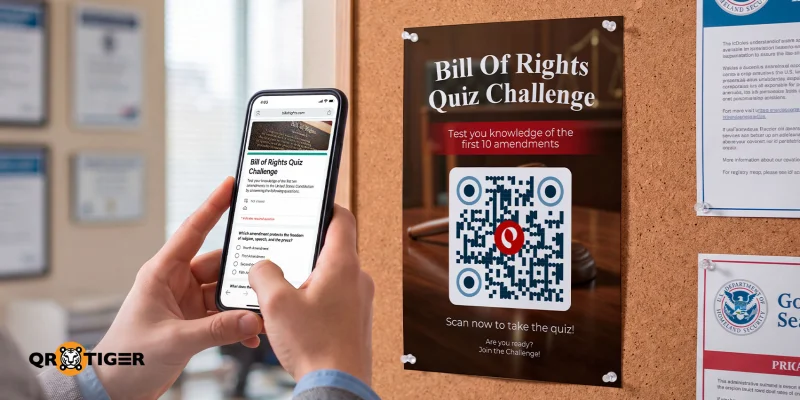
Businesses can incorporate discount QR codes into their Bill of Rights Day promos, offering them to customers who complete a short quiz or puzzle based on the Bill of Rights amendments and their history.
For example, a local bookstore could offer a discount voucher to anyone who correctly answers five questions about the Bill of Rights, and when they do, the business can provide a coupon QR code that can be scanned at the counter to redeem the discount.
Not only will it encourage those who join to learn more about the Bill of Rights, but it will also encourage consumers to engage and purchase.
How to create a Bill of Rights Day QR code
Using QR codes for Bill of Rights Day in 2026 makes it easier to share information, collect event registrations, and provide educational resources.
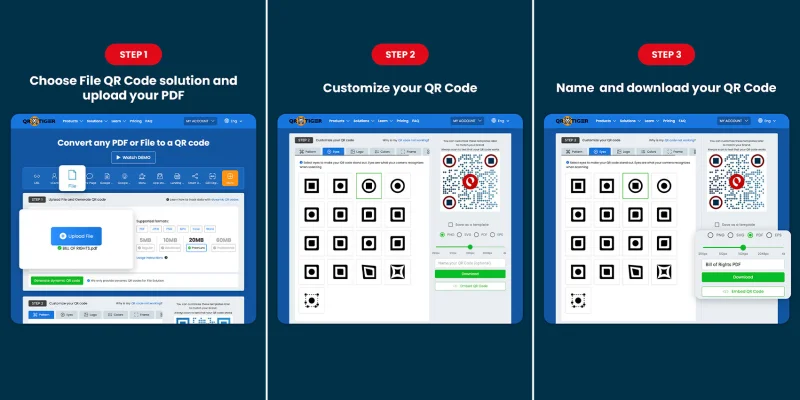 An advanced QR code platform lets you easily create a QR code for any Bill of Rights Day activity. Here’s a step-by-step guide to help you create your own:
1. Open QR TIGER and select a QR code solution that fits your needs (URL, File, video, etc.).
2. Choose between a Static QR or a Dynamic QR code.
3. Enter all the information you need to link to the QR code.
4. Select “Generate.”
5. Customize the QR code and include a call-to-action.
6. Test the QR code by scanning it using different smartphones and at different angles.
7. Select a format for the QR code image before hitting “Download.”
Pro tips on creating a QR code for Bill of Rights Day activities
 Make this year’s Bill of Rights celebration much more educational and engaging by following these tips on creating a professional QR code:
1. Use dynamic QR codes
Businesses and organizations recommend using a dynamic QR code as it supports QR code analytics and allows users to update the QR code's destination at any time, even after it's been printed.
Platforms like QR TIGER allow users to access advanced features beyond tracking under paid plans, like:
- QR code expiry feature - Lets users set scan limits and expiry dates for time-sensitive campaigns/events.
- QR code passwords - Locks QR code content behind a password for privacy protection.
- QR code retargeting tools - Allow you to send targeted ads to users who scanned your QR code.
- Automated email scan reports - Automatically notifies a user via email if their QR code has been scanned.
- UTM Builder for URL QR codes - Applies UTM tracking tags to your URL to better measure engagement with your printed QR codes.
2. Use a secure and reliable QR code generator
Choose a QR code generator that reliably generates QR codes and offers advanced security features to help protect users from data breaches and other potential risks.
Our recent Industry report reveals that 40% of QR code users hesitate to scan a QR code due to security concerns.
By choosing a trustworthy QR code generator, you ensure that your QR code is generated correctly and securely, so users can scan it with greater confidence.
3. Choose a simple design
Based on the report we released earlier this year, around 35% of users are more likely to scan a simple black-and-white QR code that includes the company logo. This means that a majority of QR code users prefer simple, professional designs.
If you plan to use QR codes for Bill of Rights Day, use only customized, brand-safe QR codes for awareness campaigns that first educate users about what to expect when scanning.
4. Add a call-to-action (CTA)
Over 41% of QR code users prefer to see a clear description of the content or benefits before scanning. So the less information users have about your QR code, the more likely they are not to scan it.
Adding a CTA next to your QR code gives users a clearer idea of what to expect, which can encourage them to scan it and engage with its content.
5. Select high-quality formats
To ensure the QR code can be scanned effortlessly, download and print it at the highest available image quality.
For large posters and billboards, select the SVG format, as it allows users to scale the QR code without affecting image quality.
If you’re planning to share QR codes on social media, choose the PNG format, as it works best on digital platforms.
6. Save your QR code template
Make sure to save any custom QR code design as a template if you plan on using it in the future.
To save your QR code template, click the checkmark box below the QR code design window labeled “Save as a template.”
Celebrate liberty with QR codes
A Bill of Rights Day QR code turns posters, worksheets, and museum displays into interactive lessons, giving people quick access to the amendments, quizzes, and audio exhibits without crowding the physical space.
Make this December 15 more engaging for your students, visitors, or community. Create your Bill of Rights Day QR code with QR TIGER today.
This article is for general informational purposes only and does not constitute legal, financial, or other professional advice. For questions about QR TIGER's products or services, please contact our support team at [email protected].
Frequently Asked Questions (FAQ)
What is Bill of Rights Day?
What was the purpose of the Bill of Rights?
Which Bill of Rights is most important?
What’s the best QR code generator for Bill of Rights Day?
How do I create a customized QR code?
Was this article helpful?
Maximize Scans with the Best QR Code Generator
Join thousands of global brands using QR TIGER to manage dynamic routing, bulk creation, and deep attribution analytics.
Get Started For Free