
How to Use QR Codes to Collect Customer Feedback

Use a QR code for feedback to send your customers to a short feedback form or survey. Place the code at key customer touchpoints to make it easier for them to respond immediately.
When you ask for customers' opinions at the moment they interact with your business, you get timely information that helps you better understand their pain points and needs, improve what you offer, and make informed long-term business decisions.
Read on to learn how a feedback QR code works, how to create one for your business, and how to use it to get scans and actionable responses from your customers. Plus, tips on what to do with the feedback you receive.
Key takeaways
|
Table of Contents
- How does a QR code for feedback work?
- How to create a QR code for a customer feedback form
- Best practices for using a feedback QR code
- Where and when to place a feedback QR code
- What to do with customer feedback after they scan
- Frequently asked questions (FAQs)
- Can you use a QR code to collect customer feedback?
- What should a feedback QR code link to?
- Where should I put a QR code for customer feedback?
- Can a QR code link to a feedback form?
- Can I use a feedback QR code without Google Forms?
- How many questions should a feedback QR code have?
- Can I use a QR code to collect anonymous feedback?
- Can I change the feedback form after printing the QR code?
- What's the difference between a feedback QR code and a review QR code?
- How do I create a QR code for customer reviews?
- Can I track scans from a QR code for reviews?
- Generate a customized feedback QR code for your business
How does a QR code for feedback work?
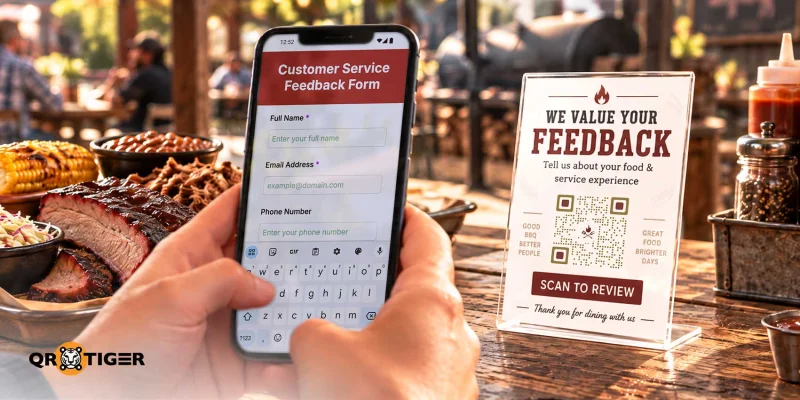
A QR code for feedback links to a short online survey or questionnaire to collect customer comments, suggestions, and complaints about a product, service, purchase, or event.
After you create a Google Forms QR code or a similar QR for a customer feedback form, place it on banners, posters, product packaging, and other spaces where your customers can comfortably scan and fill out the form.
The people who scan it with their smartphone’s camera immediately open the form, enter their response, and submit it to you while the experience is still fresh in their minds.
The dynamic QR code for your feedback form provides scan information, such as how many people scanned it, when, their estimated location, and the types of devices they use.
Meanwhile, the online form collects all responses from those who submitted feedback. Depending on the platform and how you set up your feedback form, you can see satisfaction ratings, a percentage breakdown of the answers on multiple-choice questions, or full comments.
How to create a QR code for a customer feedback form
Follow the steps to create a feedback form and generate a QR code for it.
1. Create a feedback form
Build a feedback form in Google Forms or an online form builder of your choice. Add the questions or metrics you want customers to answer, such as experience ratings, comments, and suggestions about your service, product, or event.
2. Copy the shareable link of the online feedback form
Once you are done making your feedback form, select the “copy” or “make a copy” button to get its shareable URL.
3. Open a QR code generator on the web
Go to QR TIGER and select “URL” or “Google Form.” Then, paste your feedback form link in the required field.
4. Select the “Dynamic QR” option
Choose a dynamic QR code to edit the destination to another feedback form later, without reprinting or creating a new QR code. You can also track the code’s scan counts, dates, times, and locations.
Select the static QR code if you will use the same online form or platform to collect customer feedback for your business. Remember that it embeds the link permanently. If you’re changing the online form later, you'll need to create a new QR code for it.
To learn more about the differences, advantages, and disadvantages of the two, read our static vs. dynamic QR code guide.
5. Click “Generate QR code” and customize
Click the “Generate QR code” button and customize its design to fit with your purpose, business style, or branding.
Add your business logo, apply your brand colors, and select a new frame, eye, and pattern design for your code.
Tip: Use a darker color for the eye and QR code pattern, and keep the background color a lighter shade. This helps smartphone cameras recognize the QR code faster and more accurately.
6. Test the QR code
Run a QR code test first using the preview to make sure it redirects to the correct online feedback form.
7. Download your QR code
If everything works fine, download it, then distribute your QR code online and in print—it's scannable in both formats.
More to Explore:
- How to Create a QR Code for Google Form: Scan & Collect Responses
- How To Create a QR Code For Google Reviews

Best practices for using a feedback QR code
The QR code’s placement, survey design, question quality, timing, mobile experience, and CTA determine whether people actually scan and respond. Make sure to follow these best practices when using a QR code for feedback collection.
- Keep your feedback form short: Ask only for the information you actually need. Keep your customer feedback survey questions focused on what you want to learn about from them.
- Make the feedback form mobile-friendly: The QR code feedback form is designed to be accessible on customers’ smartphones. Keep the form easy to read with short questions, simple answer choices, and buttons that are easy to tap on small screens.
- Test the QR code and the feedback form: Scan the QR code before displaying it to confirm it directs to the correct feedback form. Fill out the form on your smartphone to ensure the questions, buttons, and submission process work well.
- Place the QR code at the right customer touchpoint: Make sure customers can see and scan it easily, shortly after the experience is still fresh, without interrupting them.
- Tell customers the purpose of your QR code: Include a CTA near it so customers know what will happen when they scan it. Add a simple guide like “Share your feedback” or “Scan to rate your experience.”
Optional: You can offer incentives for completing a survey only when it is appropriate. Public review platforms, such as Google Reviews, have strict rules against incentivized reviews.
Where and when to place a feedback QR code
QR codes for feedback should be placed where people are most likely to see and easily scan them. The right timing also gives people enough time to genuinely share their thoughts about your products or services.
Restaurant tables and menus
If you’re a restaurant owner or manager, place the QR code for your feedback form on separate cardboard, table tents, receipts, or checkout containers.
Customers can scan the code after they eat to leave some feedback on the food, service, or overall experience.
You can do the same if it's a QR code for customer reviews. To make it easier for customers to organize their thoughts and post a public review more confidently, you can use a tool like ReviewCook that supports both feedback and review writing.
Customers can scan the code, leave a voice message or text, and the platform creates a clear review draft based on their own ideas that they can edit, approve, and post on the restaurant's Google Reviews page.
Airports
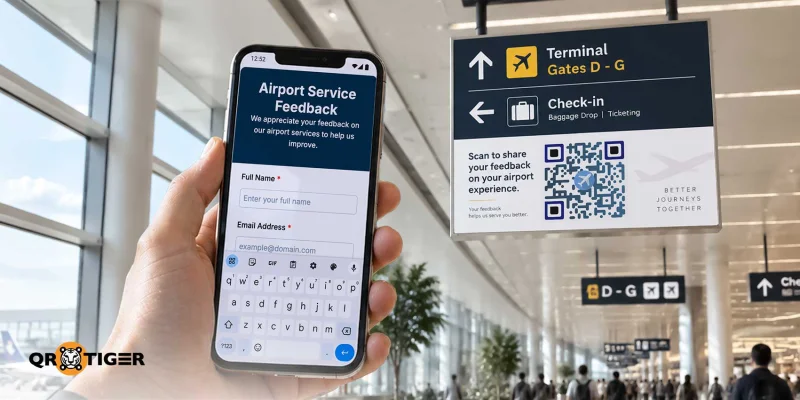
For airport administrators, you can place the QR codes at various points in the establishment, such as halls, bathrooms, check-in areas, entrances, and other service points where passengers gather.
Whether it’s about the area's tidiness and maintenance, the available airport services, or staff support, passengers and visitors can simply scan the QR code to share their experience and leave feedback instantly.
Product packaging
The fewer steps customers need to take, the easier it is for them to respond.
You can position your product feedback QR code in the packaging so customers can share their feedback straight away using your product.
Once the code is scanned, it redirects to the fill-out form to rate it, report an issue, or leave comments about their experience.
Events
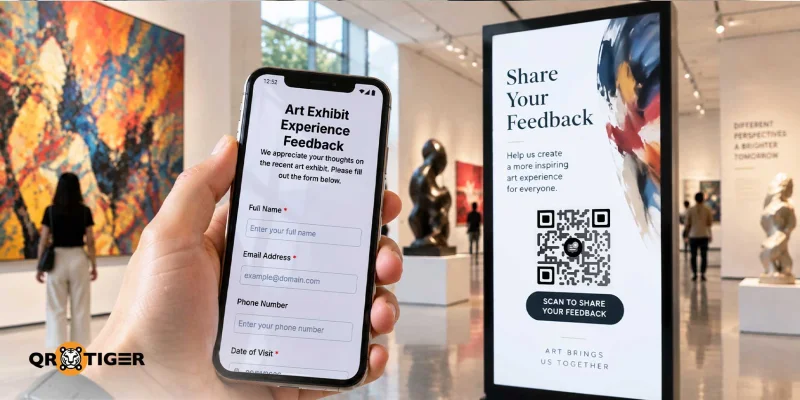
Event organizers like you can set up the feedback survey QR codes inside the venue. This leads guests directly to the form when they scan it, allowing them to quickly enter their thoughts about their experience, the venue, or management.
You can print and place them on booth tents, the attendance area, or right at the entrance.
Webinars and conferences
Display a feedback QR code at the end of your presentation or between conference sessions. This gives participants an easy way to share their thoughts while the experience is still fresh, instead of relying on them to remember to respond after the event.
At DigiCon 2025, organizers used feedback QR codes to gather attendee feedback more efficiently. By displaying a code on the screen after each session, they recorded more than 11,500 QR code scans and collected 7,425 responses from attendees.
Hotels
Hotels can encourage guests to rate their stay by adding a Google Review QR code to their room service. You can collect their feedback at various points throughout a guest’s stay rather than waiting until checkout.
The Fern Residency Chembur and its affiliated property, The Acres Club, show how it works in practice. They use a QR code to let their guests conveniently share their thoughts online.
The hotel also uses QR codes to provide guests with the menu and important hotel information.
What to do with customer feedback after they scan
After customers scan the QR code and submit their feedback, review, organize, and act on their responses. Use the feedback to identify recurring issues, understand customer preferences, and prioritize improvements.
- Organize the responses: Group feedback into categories such as product quality, customer service, pricing, maintenance, or suggestions. This makes common themes easier to recognize.
- Identify recurring issues: Look for problems or concerns that multiple customers mention. Pay particular attention to feedback that points to areas where the customer experience could be improved.
- Act on issues you can address quickly: Resolve straightforward problems as soon as possible instead of waiting for the next review cycle. For more complex issues, document them and assign them to the appropriate team.
- Track the changes you make: Keep a record of the improvements made based on customer feedback. You can then compare later responses to see whether the same issues persist.
- Follow up with customers when appropriate: If a customer raises a specific concern and provides a way to contact them, let them know how you or your team plans to address the issue. This can also show customers that their feedback is being heard.
Don’t just wait for scans and responses. Take appropriate action based on what your customers tell you. Address recurring concerns, make practical improvements, and follow up when necessary.
Collecting feedback is only the first step; acting on it is what helps you improve your customer service and create a better customer experience.
Frequently asked questions (FAQs)
Can you use a QR code to collect customer feedback?
Yes. Link the QR code to an online feedback form so customers can scan it with their phones and give comments, ratings, or suggestions.
What should a feedback QR code link to?
Link your feedback QR code directly to the form, survey, or feedback pages where you want customers to share their feedback.
Where should I put a QR code for customer feedback?
Place your customer feedback QR in areas where people are most likely to go or see easily. This could appear in various spaces and settings, such as packaging, restaurant menus, tables, or marketing campaigns.
Can a QR code link to a feedback form?
Yes, you can turn the link of an online feedback form into a QR code. Once scanned, the code opens the form on the customer’s phone so they can submit their response.
Can I use a feedback QR code without Google Forms?
Yes, with any online form or survey platform that lets you share its link. Simply copy the link and connect it to your QR code for feedback.
How many questions should a feedback QR code have?
Keep it short and add three to five essential questions for quick feedback. The right number still depends on what you need to learn and how much time customers are likely to spend answering.
Can I use a QR code to collect anonymous feedback?
Yes, as long as the feedback form connected to QR codes allows anonymous responses. QR codes only lead the customers to your feedback form.
Can I change the feedback form after printing the QR code?
Yes, if you use a dynamic QR code. You can update the code’s destination to different feedback forms without reprinting it. It’s not possible to do this with static QR codes because your form’s link is permanently stored in the code’s pattern itself.
What's the difference between a feedback QR code and a review QR code?
Feedback QR codes lead customers to a survey that only businesses can see and use to improve their products or services. A review QR code links to a publicly visible review page, so businesses can build trust and gain online visibility.
How do I create a QR code for customer reviews?
Copy the link of your customer review form or platform and paste it into a QR code generator. Generate the code and personalize its design. Scan it first before printing.
Can I track scans from a QR code for reviews?
Yes, you can track the scans of your customer review QR code if it is dynamic. You can monitor scan activity in the QR code software you’re using, including how many people scanned it, when they did so, their approximate locations, and the types of devices used (desktop or smartphone).
Generate a customized feedback QR code for your business
A feedback QR code gives your customers a convenient way to rate their experience, leave comments, and share suggestions. Their responses can help you identify areas for improvement and make more informed decisions about your products or services.
You can create and customize the QR code to fit different customer touchpoints, whether it’s on packaging, receipts, tables, displays, or event materials. Remember to follow best practices to encourage people to scan and actually respond.
Make it easier for customers to share their thoughts when it matters. Create a dynamic QR code for your feedback form or survey with QR TIGER.