
Medicines May Now Get Braille and Audio QR Codes in India
 By Ashley P.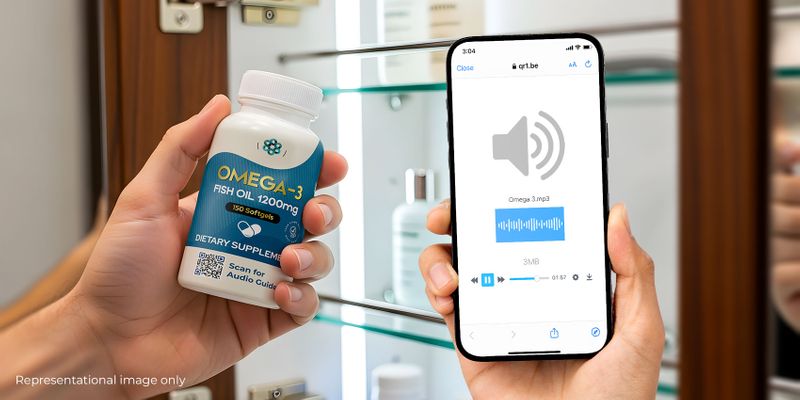
The drug regulatory authority in India proposes the use of audio QR codes on medicine strips to assist the visually impaired people in identifying medications.
The committee also suggests adding a secondary packaging with a braille card and requests for it to be stipulated in a provision under the Drugs and Cosmetics Act and Rules.
This initiative comes in response to representations highlighting the difficulties faced by visually impaired people in identifying medicines and expiry details.
India currently has an estimated 8 million blind persons and 62 million visually impaired persons, according to The National Medical Journal of India.
Table of Contents
Lost in the packaging
Difficulty in identifying and using medicines safely is a persistent issue for people with blindness and visual impairment around the globe.
In a research conducted by the World Health Organization (WHO) in Sri Lanka, it was found that most visually impaired people want to manage their medicines independently, yet many struggle to locate pills, identify containers, or measure liquid doses correctly.
These challenges often led to missed doses, wrong quantities, or even premature discontinuation of treatment.
To cope, people came up with their own methods such as using different container shapes, tying medicines to clothing, or dipping a finger into measuring cups. However, these methods are not always reliable.
Some situations even lead to accidents, such as confusing vinegar with gripe water or using ear drops in the eyes.
As a prevalent problem in India, its Central Drugs Standard Control Organization (CDSCO) sees braille and QR codes on drug packaging to potentially address many of these issues faced by visually-impaired persons in the country.
From label to voice: A ‘quick-response’ support

To address these challenges, the expert committee is considering the use of QR codes on medicine strips that link to voice assistance.
When the QR code on packaging is scanned, it will read out important information such as the name of the medicine, dosage instructions, manufacturing and expiry dates, and other key details.
This simple feature could significantly reduce the chances of visually impaired people taking the wrong medicine, missing doses, or stopping treatment early.
According to Dr N K Pandey, Chairman and Managing Director of Asian Institute of Medical Sciences, “The inclusion of QR codes further enhances this initiative by allowing access to audio or digitally readable information, which is particularly helpful for the partially sighted."
However, considering the different degrees of visual impairments (from low acuity to complete blindness), adding braille inscriptions together with the audio QR codes ensures the information about medications remains accessible to them even without the aid of another person or device.
Presently, the Central Drugs Standard Control Organisation (CDSCO) opens these suggestions for public feedback before taking the next action.
QR code for accessibility
India would not be the first nation to take this step towards inclusivity. In the European Union (EU), countries like Slovenia mandate that the names of medicines be printed in Braille on packaging.
Similarly, the Gulf region has also moved forward, with the United Arab Emirates (UAE) requiring pharmaceutical companies to include both Braille and QR codes on medicine packs so patients can scan and hear important details.
Beyond regulations, some companies in Japan and other markets are experimenting with “accessible codes” that allow visually impaired users to scan a QR code, created using an advanced QR code generator software, and instantly hear drug information read aloud.
India’s push towards inclusive healthcare
India’s proposed move to put QR code voice assistance and braille cards on medicine packaging could be life-changing for visually-impaired people.
These reforms would not only support their independent use of medicines but also mark a great shift toward a more inclusive healthcare in the country. 
This article is for general informational purposes only and does not constitute legal, financial, or other professional advice. For questions about QR TIGER's products or services, please contact our support team at [email protected].
Was this article helpful?
Maximize Scans with the Best QR Code Generator
Join thousands of global brands using QR TIGER to manage dynamic routing, bulk creation, and deep attribution analytics.
Get Started For Free