
21+ Countries That Require eTravel QR Codes for Entry in 2026
On May 13, 2026, Egypt signed agreements to launch a digital visa-on-arrival system to replace the cash-only payment requirement in the current visa-stamp process. The system uses QR codes, which travelers must present to immigration officers upon arrival.
Officials state that the move is the country’s shift to digital visa issuance. The new system is set to begin full operations at Cairo International Airport in August 2026.
This makes Egypt the latest country to use QR codes in the immigration process. Others are set to do the same, while over 21 countries have travel QR code systems already operational.
Table of Contents
Countries requiring travel QR codes in 2026
The following countries have created new systems that offer a travel QR code to allow faster entry into their territories:
- United States of America (MCO Reserve, exclusive to Orlando International Airport)
- Canada (Digital Visa)
- Australia (Qantas App QR code)
- Dominica (Online Embarkation and Disembarkation (ED) Card)
- Trinidad and Tobago (Online Arrival/Departure Card)
- Haiti (iKat)
- New Zealand (New Zealand Traveller Declaration (NZTD)
- Palau (Palau Entry Form)
- China (Digital Arrival Card)
- Japan (Japan Web Immigration QR code)
- India (India e-Arrival Card)
- Sri Lanka (Electronic Travel Authorisation)
- Cambodia (Cambodia e-Arrival)
- Thailand (Thailand Digital Arrival Card)
- Laos (Lao Digital Immigration Form)
- Vietnam (Vietnam Pre-Arrival Form)
- Malaysia (Malaysia Digital Arrival Card)
- Singapore (MyICA mobile app QR code)
- Philippines (eTravel QR code)
- Indonesia (Indonesia Customs Declaration (e-CD)
- Nigeria (e-Visa)
- Egypt (Digital Visa-on-Arrival)
- Cameroon (Cameroonian E-visa)
How to acquire an eTravel QR code
To get the QR code, travelers are asked to fill out an eTravel registration form from the country’s official travel website before departure. Information that will be asked can include passport number, date of arrival, and contact details.
Once finished, a document with a QR code is emailed to them, which they can then print out or save on their mobile phone. Travelers are typically given 72 hours to register this information.
Meanwhile, the eTravel QR code in the Philippines can be accessed via the eGovPH mobile app, in addition to the official eTravel website. Travelers can apply through it, receive a QR code afterward, and simply show it to the immigration officer upon arrival.
Some countries, such as Canada and Vietnam, have recently deployed their new QR code systems in select airports, or are yet to launch their programs.
Others, like Australia, apply them only to travelers from a specific country, with plans to expand their use in the future.
Recently, Malaysian travelers have been required to secure an ETA QR code for all their visa and non-visa trips starting in February 2026.
An answer to the need for convenience and security
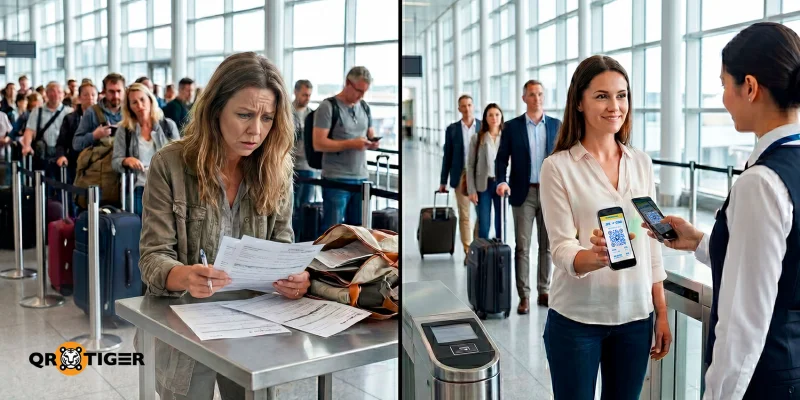
The use of a QR code generator was primarily intended to streamline the immigration process at airports. According to Vietnamese officials, their implementation of a Digital Arrival Card was meant to cut processing time for every passenger.
The effectiveness of QR codes used in this manner was proven by India’s e-Arrival system, which reduced clearance times by 40% on average.
QR codes were also used to reduce the number of staff assigned to immigration. During a pilot program in Malaysia, Home Minister Saifuddin Nasution Ismail stated that their system would reduce the number of officers by nearly 60%. This gave them room to be deployed in other areas of the airport.
Another reason for adding travel QR codes was to improve security. Qantas, an Australian airline, worked with Sydney Airport and the country’s authorities to test its digital declaration feature with the airport’s SmartGate kiosks.
According to the results of their trial, the system increased the facility’s throughput by over 640 passengers an hour. This allowed Australian Border Force (ABF) and Department of Agriculture, Fisheries and Forestry (DAFF) officers to focus on assisting travelers and performing higher-risk assessments in the name of security.
With the latest data showing that over 4 billion travelers were being transported by air, QR codes aren’t just being used to shorten lines, but to refine other airport-related services.
In Canada, China, and South Korea, QR codes are being used to direct travelers to the arrival card registration. Chinese ports of entry also feature this QR code for travelers who haven’t applied for a card before arrival.
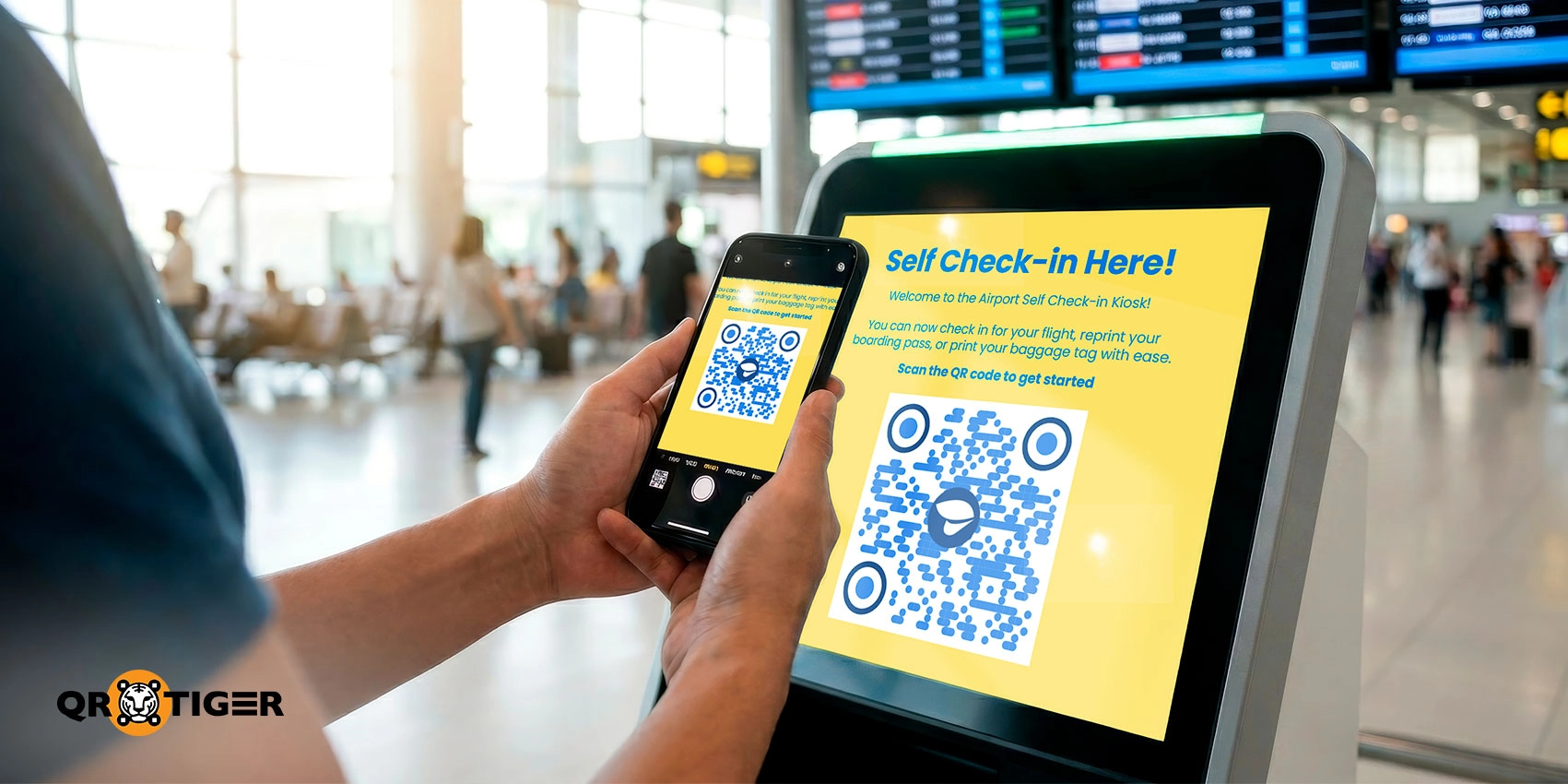
Airports are also using QR codes to assist travelers in navigating the facility. At Hamad International Airport in Qatar and Hong Kong International Airport in China, passengers can scan QR codes on kiosks, screens, and signs to get directions.
International initiatives and standards are also driving the implementation of travel QR codes. For Trinidad and Tobago, its Online Arrival/Departure Card was meant to align with the Caribbean Community (CARICOM) digital initiatives and global standards.
A faster and more digitalized travel
Despite only around 20 countries using travel QR codes in some fashion, the growing shift to digital processes is set to enable more convenient application processes and travel for tourists.
Airport officials and staff can also look forward to less paperwork to sift through, as QR code scanners at gates and kiosks will handle it.
If the new travel systems prove effective in the long run, QR code technology will become a standard for facilitating arrivals, integrated into more processes and services at points of entry.