
How to Use QR Codes on Food Packaging (and Why It Works)
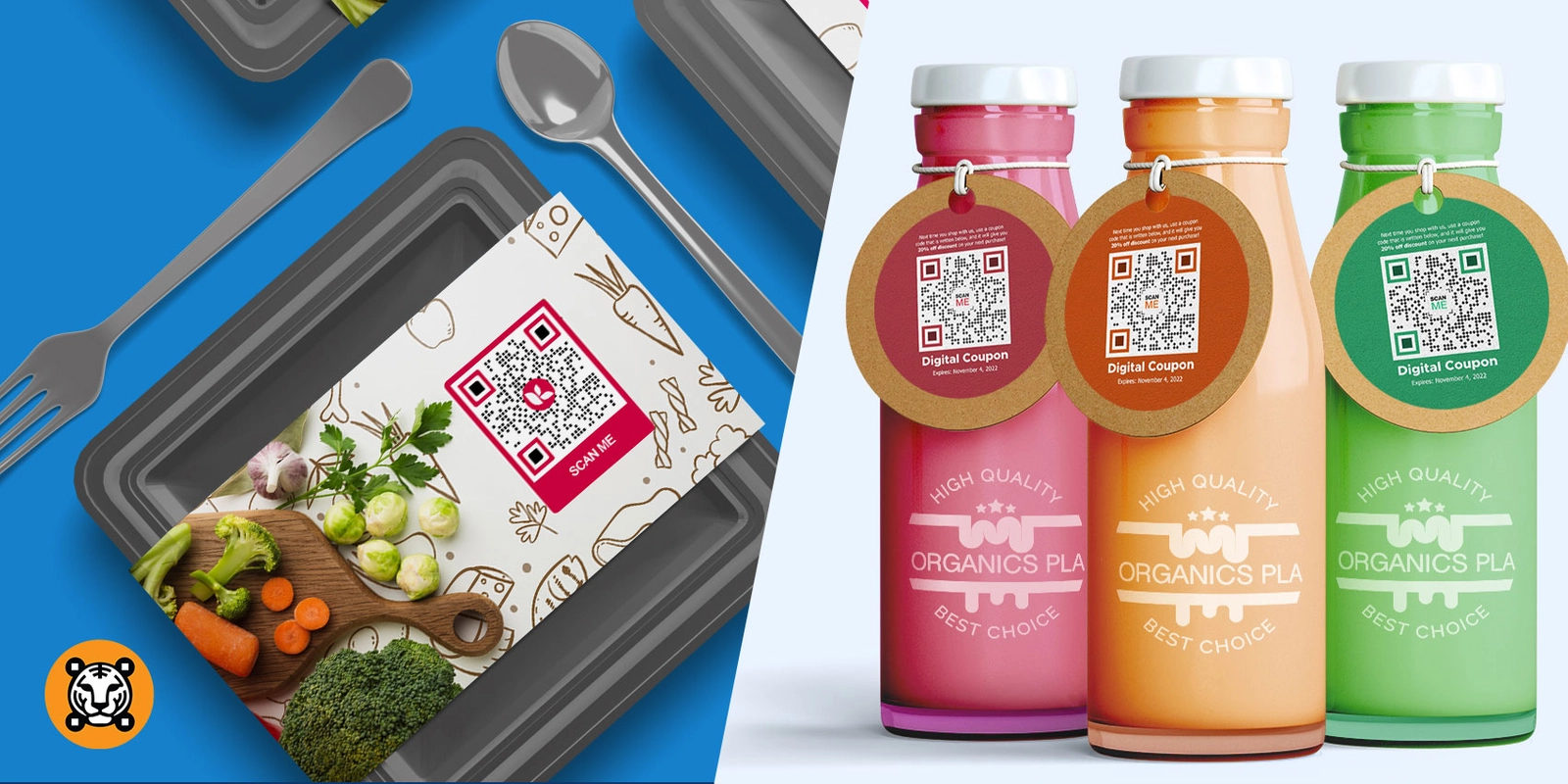
Table of Contents
- Key Takeaways
- What is the QR code on food packaging?
- Should the QR code go on the packaging itself or on the label?
- Where can you place QR codes on packaging?
- What can you link a food packaging QR code to?
- 5 tips on how to design your food packaging QR codes
- Do food packaging QR codes need to follow regulations?
- Food brands already doing this — and what you can learn
- Where food packaging QR codes go from here
- Questions we get asked a lot about food packaging QR codes
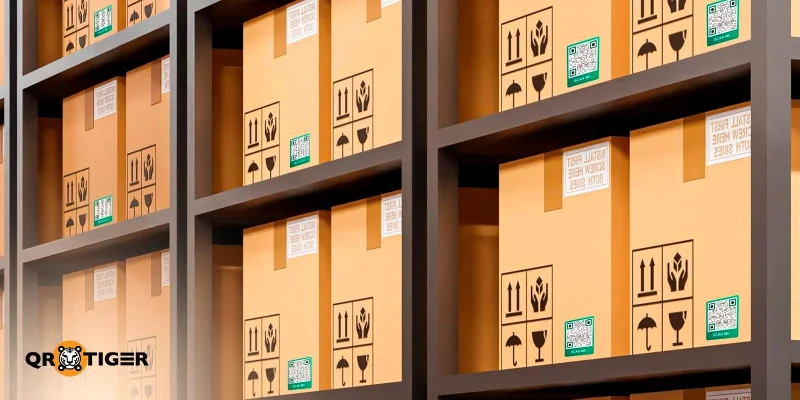
Tertiary packaging is your transport layer, like cartons, pallets, and shipping boxes. The audience is your B2B buyers: distributors, logistics partners, and retailers receiving stock.
A QR code on a shipping box turns the surface into interactive packaging. It tells your B2B buyers exactly who they’re dealing with and carries delivery manifests, product specs, handling instructions, and traceability data.
Placement on this packaging needs to survive forklift handling and pallet wrapping.
- On shipping cartons, the two adjacent sides at eye level.
- On pallets, the label pocket or a stretch-wrap-protected sleeve at standing-scan height.
- On bulk transport crates, on the short side near the corner edge.
- On reusable totes, the heat-applied or in-mold label on the long side.
QR codes that work for logistics live on flat, label-friendly surfaces at standing eye level. Anything lower gets ignored, and anything curved scans badly.
What can you link a food packaging QR code to?
The content behind your QR code shapes whether people scan again. Here’s what food brands are linking to, and why each one works.
- Product details: The most common destination. Link to a full product page with extended descriptions, sizing descriptions, sizing guides, or variants your label doesn’t have room for.
- Ingredients and allergens: Food labeling regulations have strict limits on label size. Publish a full, searchable ingredient list that the printed label can't accommodate. Useful for complex formulations and essential for allergy-sensitive consumers.
- Expiry and batch allergens: Display real-time batch recall alerts or expiry lookups. Shoppers enter a batch number and confirm whether their specific product is safe. A level of transparency that a printed label simply cannot offer.
- Traceability data: Link to a farm-to-shelf platform showing the product's origin. High value for premium and organic categories where provenance drives purchase decisions.
- Recipe videos: Give shoppers a reason to scan beyond the transaction. Practical, repeatable content keeps them engaged with your brand after the buy.
- Social media: Convert a physical touchpoint into a social follow with prompts like “See how it's made” or “Follow the farm.” A natural fit for brands whose buyers live on TikTok and Instagram.
- Loyalty programs and promotions: Capture the highest-intent moment in the customer relationship. Sign-up, point tracking, and discount claims all run off the same on-pack scan.
5 tips on how to design your food packaging QR codes
Add color to your QR codes on food packaging
To make your QR code lively and attractive, adding colors and being creative is important.
Experiment with your brand theme and make your QR code visually attractive to your target audience for them to scan it.
Pro Tip: A QR code reads through contrast, not color. Test your color scheme before committing to a print run.
Never forget to put a Call to Action
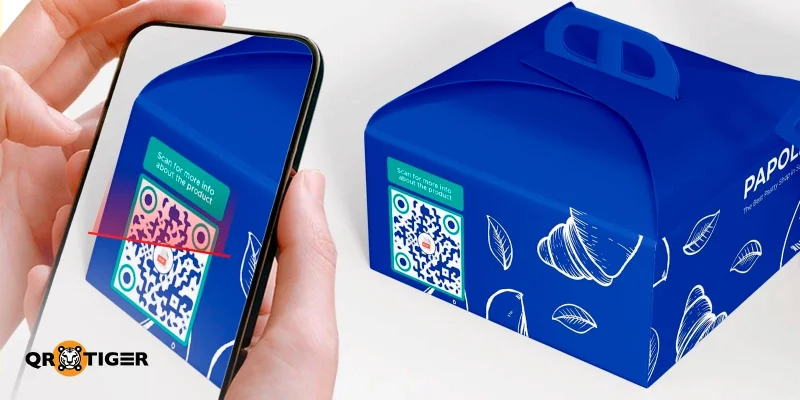
A frame and a call to action drive significantly more scans. Three words change the outcome. Short CTAs like "Scan for recipe," "Scan to trace," or "Scan for discount" work best.
The shorter the prompt, the higher the scan rate. Adding a clear CTA to your QR code gives your audience a direct reason to act.
Choose the right QR code size
A QR code that is too small fails the scan. A code that is too large eats label space you need for other content.
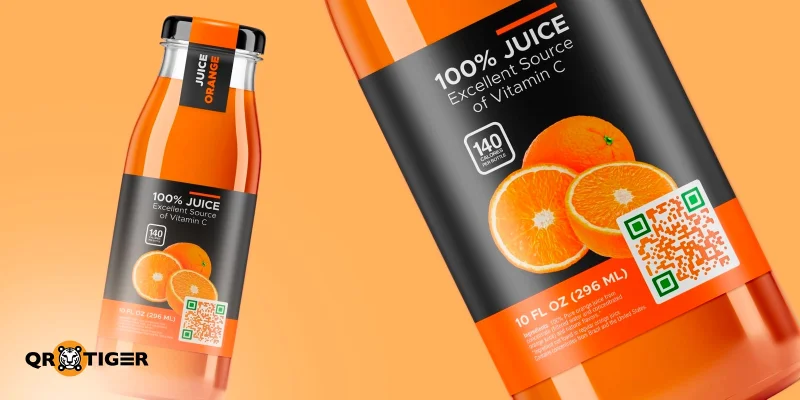
A QR code gives a digital dimension to your food packaging, so make sure people will notice it right away. Aim for at least 2 x 2 centimeters, since smaller codes struggle on low-end smartphone cameras.
Place it where people notice it
Give your QR code a prominent place on your food packaging so your customers notice it instantly. It will improve your scanning rates.
Also, don’t print your QR codes on uneven surfaces that will crumple the image of your code, making it non-scannable.
Test the material before printing
Print a test run on the exact material you will use in production, then scan it.
- Glossy plastic reflects light and breaks the read.
- Foil wrappers crinkle and distort the contrast.
- Curved glass warps the code geometry at certain angles.
Scan from multiple angles, in different lighting, with three or four phone models. Use SVG as the source file so the code stays sharp at any print size.
Do food packaging QR codes need to follow regulations?
Food packaging QR codes must comply with food labeling and advertising regulations in the markets where the product is sold.
Several countries have already set regulatory frameworks. Here are a few that you should know:
GS1 Digital Link
GS1 is the global standards body behind barcodes. Their Digital Link standard is changing how product codes are structured.
Instead of a barcode holding a 13-digit GTIN, a GS1 Digital Link QR code holds a Uniform Resource Locator (URL) encoding the same product identifier. A single code gives retailers, regulators, and consumers access to the same product data layer.
From 2027, major retailers in the United States and Europe are expected to start requiring GS1 Digital Link-compliant codes at the point of sale. If you're a food brand planning new packaging, building toward this standard now makes sense.
European Union
The European Union's Farm to Fork strategy and existing food labeling regulation (EU 1169/2011) are shaping how QR codes get used on food packaging in Europe.
Digital labeling supplements are already in use for wine and spirit labels, with broader food categories likely to follow.
EU regulations require that all information provided digitally via a QR code be accessible in an accessible format. You cannot use a QR code to hide mandatory labeling information from consumers who don't own a smartphone.
United States
The FDA is actively developing guidance on digital labeling. No formal requirement exists yet for consumer-facing QR codes in the US. The direction of travel is clearly toward acceptance of digital supplements for labeling.
Brands in regulated categories, such as supplements and allergen-sensitive products, should closely monitor the FDA's Digital Disclosure guidance.
Food brands already doing this — and what you can learn
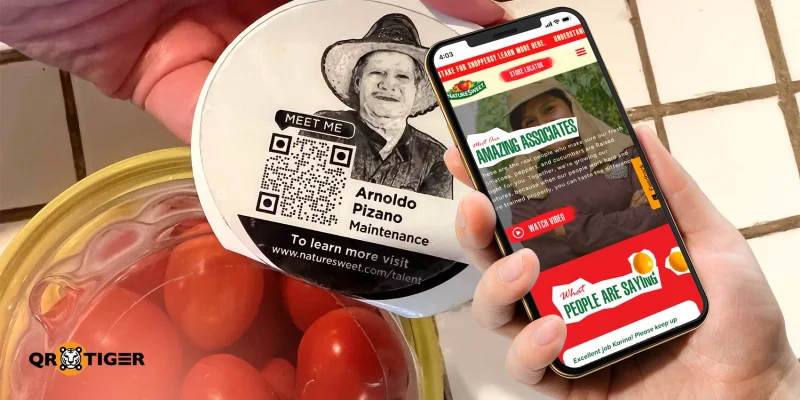
Transparency-first brands in premium grocery have used traceability QR codes to shorten the distance between the field and the shelf in consumers' minds.
NatureSweet
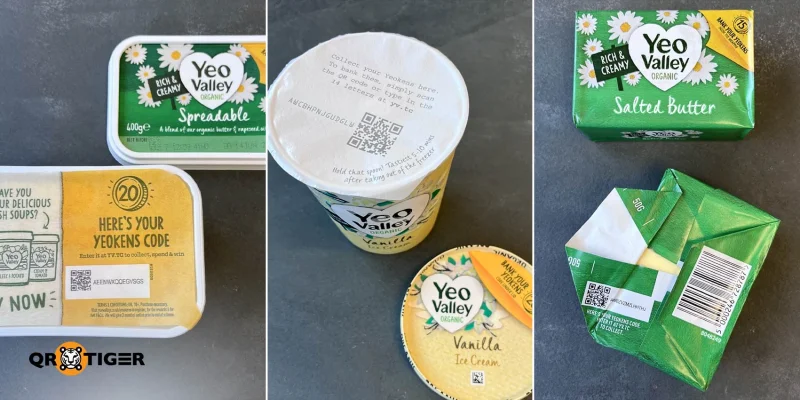
Yeo Valley Organic, a Somerset-based family-run organic dairy brand, rolled out connected QR code packaging across its entire product portfolio as part of its "Put Nature First" platform.
The approach
Working with IoT agency SharpEnd, Yeo Valley placed "Moo-R" QR codes on more than 100 million product units across its yogurt, milk, and butter lines.
Each scan routes consumers to the Yeokens loyalty program, time-based recipe content, and short films about organic farming and the climate crisis. Content shifts depending on the product, where the shopper is, and when they scan.
The result
The rollout placed Moo-R QR codes on more than 100 million Yeo Valley Organic packs at launch in 2020, one of the largest portfolio-wide deployments of dynamic QR codes in UK dairy.
Yeo Valley uses analytics to map shopper behavior across its dairy range, then adjusts the content behind each QR code based on the data.
Managing Director Adrian Carne positioned the QR codes as a permanent infrastructure rather than a one-off campaign.
Takeaway
Dynamic QR codes scale across a full product line when the content engine behind them stays flexible. Yeo Valley's setup shows what dynamic QR codes look like at portfolio scale: one code, many destinations, adapted per product and per scan context.
For brands planning for GS1 Digital Link compliance in 2027, this dynamic setup is the kind of infrastructure you'd want in place first.
Where food packaging QR codes go from here
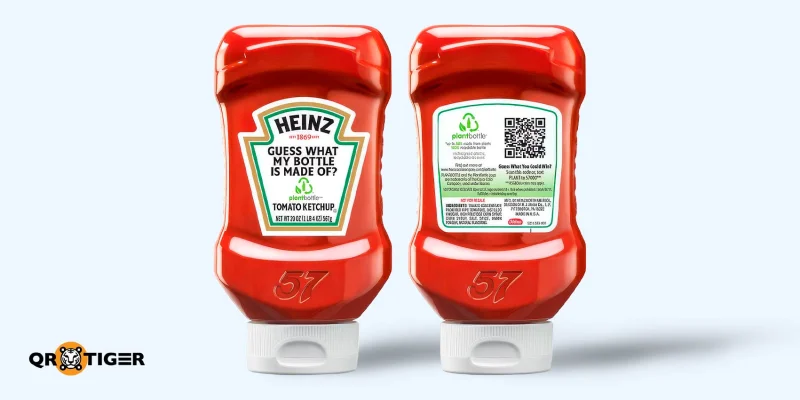
QR codes on food packaging are now standard infrastructure for consumer packaged goods (CPG).
They extend the food packaging and free up label space for brand identity, primary nutrition facts, and the regulatory text, all of which are legally required on the front of the pack.
When you implement them this way, your packaging becomes a two-layer system: the labels communicate what the product is, while the QR codes explain what it represents.
Ready to add one? Here’s how to get started
QR TIGER offers a free tier for generating dynamic QR codes. Sign up now, run a small-scale test on one product line, and see how the code performs before you scale across your full lineup.
Questions we get asked a lot about food packaging QR codes
Do QR codes on food packaging expire?
The QR code itself doesn't expire. The subscription status of your dynamic QR code platform might change. If your account lapses, the redirect stops working. Keep your platform subscription active for as long as the packaging is in circulation.
How small is too small for a food packaging QR code?
2 x 2 cm is the minimum for reliable scanning. Anything smaller risks failure on low-contrast materials or in poor lighting. If your packaging is small, a rectangular layout (wider than it is tall) sometimes fits better than a square layout.
Are QR codes free to add to packaging?
Generating a QR code is free. Dynamic QR code platforms with analytics carry a subscription cost. Print setup for adding the code to your artwork is no different from any other design change. The main cost is in the content strategy behind the code.