
US FDA UDI: Jak działają kody QR urządzeń medycznych z GS1
 Przez Regie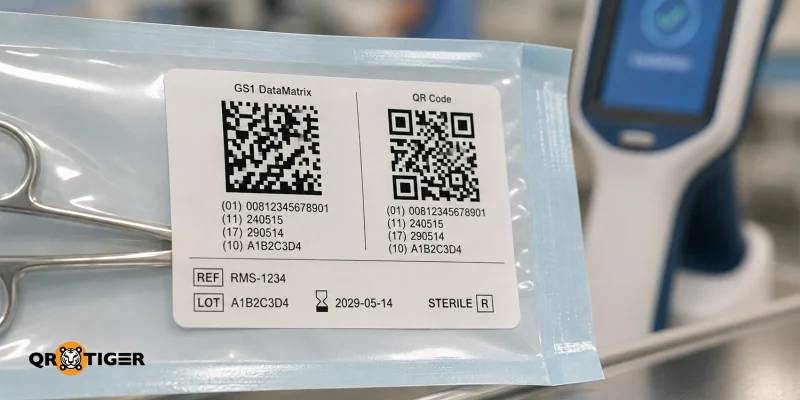
Agencja Żywności i Leków Stanów Zjednoczonych (FDA), zgodnie z przepisami dotyczącymi Unikalnej Identyfikacji Urządzenia (UDI), wymaga, aby większość regulowanych wyrobów medycznych nosiła standaryzowany identyfikator na swoich etykietach i opakowaniu.
Zgodnie ze standardami GS1, GS1 DataMatrix jest preferowanym kodem kreskowym dla głównego nośnika UDI. Kody QR pełnią rolę uzupełniającą, wspierając elektroniczne instrukcje użytkowania (eIFU), ogłoszenia o wycofaniu oraz treści rynkowe.
GS1 DataMatrix koduje dane urządzenia w strukturalne pola czytelne przez skanery szpitalne. Kody QR łączą użytkowników z treściami cyfrowymi za pośrednictwem smartfonów i systemów połączonych.
Oświadczenie Ten artykuł ma charakter wyłącznie informacyjny. Nie stanowi porady prawnej ani regulacyjnej. Wymagania dotyczące identyfikatora urządzenia medycznego (UDI) oraz polityki egzekwowania FDA mogą ulec zmianie. Producenci powinni zweryfikować obecne wymagania z FDA, odpowiednim organem wydającym oraz wykwalifikowanym doradcą przed podjęciem działań na podstawie jakichkolwiek wskazówek tutaj. Daty wymienione w tym artykule są dokładne na dzień 30 czerwca 2026 roku. |
Spis treści
- Jaki jest system UDI FDA dla urządzeń medycznych?
- Jaki to jest unikalny identyfikator urządzenia (UDI)?
- Jak standardy GS1 wpisują się w system identyfikacji produktów (UDI) Agencji Żywności i Leków w USA?
- Dlaczego GS1 Data Matrix zamiast kodów QR?
- Co to jest bezpośrednie znakowanie części i kiedy się stosuje?
- Jak zgłoszenia do GUDID wpływają na zgodność etykiet
- Jak wybrać odpowiedni kod kreskowy dla klasy urządzenia
- Powszechne błędy związane z zgodnością UDI, których należy unikać
- Podsumowanie
- Twój kolejny krok w zakresie zgodności z UDI FDA w USA
- Typowe pytania dotyczące zgodności z UDI
- Warunki i definicje
Jaki jest system FDA UDI dla urządzeń medycznych?
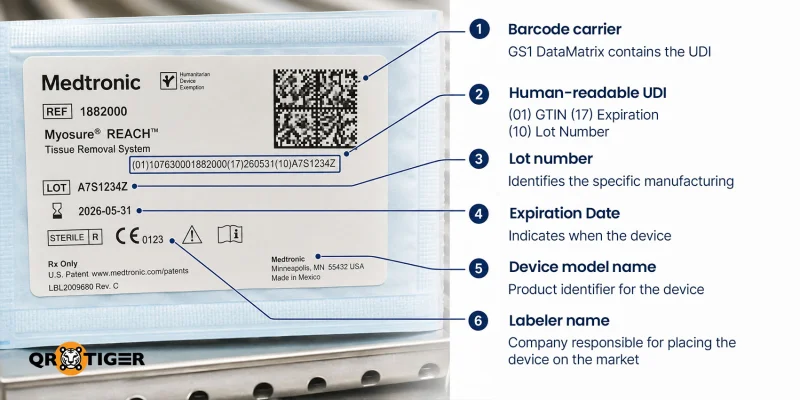
Unikalny system identyfikacji urządzeń (UDI) FDA to struktura, która przypisuje standaryzowany identyfikator do każdego regulowanego urządzenia medycznego.
Pozwala organom regulacyjnym śledzić, identyfikować i monitorować bezpieczeństwo urządzenia przez cały cykl życia—od dystrybucji do użytku przez pacjenta.
Regulacja UDI FDA została sfinalizowana 24 września 2013 r. na podstawie części 801 i 830 Kodeksu Federalnych Przepisów dotyczących Żywności i Leków.
Urządzenia oznaczone po 24 września 2023 r. muszą spełniać wszystkie wymagania dotyczące identyfikacji urządzeń (UDI), w tym zakaz dotyczący przestarzałych identyfikatorów National Drug Code (NDC) i National Health Related Item Code (NHRIC).
System UDI adresuje lukę w śledzeniu dla urządzeń medycznych sprzedawanych w Stanach Zjednoczonych.
Przed standaryzowanymi identyfikatorami, wycofania wymagały szerokich powiadomień, ponieważ producenci nie mogli szybko namierzyć wadliwej partii.
Teraz szpitale mogą przeskanować GS1 DataMatrix przytwierdzony do urządzenia medycznego, pobierać szczegóły z bazy danych UDI i szybciej przywoływać poprawne jednostki.
Jakie urządzenia medyczne muszą mieć identyfikator urządzenia (UDI)?
Wytyczne FDA dotyczące identyfikatorów urządzeń (UDI) wymagają, aby następujące rodzaje urządzeń medycznych posiadały unikalne identyfikatory:
- Klasa I (niskie ryzyko) Przedmioty medyczne, takie jak opatrunki, zestawy do lewatyw, i podstawowe narzędzia chirurgiczne. Większość nie podlega oznakowaniu UDI zgodnie z wyłączeniami praktyki dobrej produkcji (CGMP) FDA.
- Klasa II (średnie ryzyko) Przedmioty takie jak testy ciążowe, prześcieradła chirurgiczne i sprzęt, na przykład zasilane wózki inwalidzkie. Ta kategoria stanowi największą pod względem objętości, z większością urządzeń wymagających pełnej zgodności z UDI.
- Klasa III (wysokie ryzyko) Urządzenia medyczne, takie jak wszczepialne rozruszniki serca i implanty piersi. Podlegają one najbardziej rygorystycznym zasadom dotyczącym identyfikacji urządzeń medycznych, z rzadkimi wyjątkami dla jednorazowych przedmiotów do sterylizacji.
Zanim przejdziesz do przodu Terminy Unikalna Identyfikacja Urządzenia (system regulacyjny) i unikalny identyfikator urządzenia (tekst lub kod przypisany do urządzenia) to dwa powiązane, ale różne pojęcia. Oba są skrócone jako UDI. Niniejszy przewodnik wyjaśnia różnicę tam, gdzie jest to istotne. |
Czym jest unikalny identyfikator urządzenia (UDI)?
jpg_800.jpeg "UDI Device Identifier and Production Identifier")
Unikalny identyfikator urządzenia (UDI) to globalnie rozpoznawalny kod obecny na etykiecie urządzenia. Pojawia się w dwóch formatach: zwykłym tekście (format numeryczny lub alfanumeryczny) oraz w postaci kodu kreskowego czytanego przez maszynę.
Numer UDI składa się z dwóch części: identyfikatora urządzenia (DI) i identyfikatora produkcji (PI).
Identyfikator urządzenia (DI)
DI prezentuje model urządzenia, wersję oraz etykietującego producenta lub producenta. Jest używany jako klucz referencyjny do uzyskania dostępu do rekordu urządzenia w Globalnej Bazie Danych o Unikalnej Identyfikacji Urządzenia FDA (GUDID). Nigdy się nie zmienia dla danej wersji produktu.
Identyfikator produkcji (PI)
PI zawiera dane produkcyjne, takie jak numer partii, numer seryjny, data produkcji lub data ważności. Zmienia się z partii na partię. Jego uwzględnienie zależy od tego, czy dane produkcyjne znajdują się na fizycznej etykiecie.
Zestaw DI plus PI obsługuje zarówno ręczne wprowadzanie danych przez personel, jak i automatyczne skanowanie przez systemy kliniczne.
Elektroniczne rekordy medyczne szpitala analizują informacje i dzielą je na pola takie jak inwentarz, rekordy pacjentów i rozliczenia bez konieczności manualnego przetwarzania.
Jak standardy GS1 wpisują się w system identyfikacji produktów medycznych (UDI) Agencji Żywności i Leków w USA?
Standardy GS1 UDI są jednym z akredytowanych przez FDA ram identyfikacji wyrobów medycznych.
Producenci mogą stosować swoje reguły struktury danych do przypisywania identyfikatorów. Standardy GS1 przekładają wymagania dotyczące UDI na konkretne elementy danych:
- Część DI odnosi się do globalnego numeru handlowego GS1 (GTIN).
- Część PI odpowiada identyfikatorom aplikacji GS1 (AI), z którymi każdy jest poprzedzony prefiksem numerycznym.
Oto pięć kodów AI najbardziej istotnych dla zgodności z UDI, z przykładem kodu UDI dla każdego:
| Kod AI | Pole | Format | Przykład |
| 01 | GTIN | 14 cyfr | 01)00850006000012 |
| 11 | Data produkcji | YYMMDD | 11)260629 |
| 17 | Data ważności | YYMMDD | 17)280629 |
| 10 | Numer partii lub serii | Do 20 znaków alfanumerycznych | ABC123 |
| 21 | Numer seryjny | Do 20 znaków alfanumerycznych | 12345XYZ |
Zgodność z wymaganiami GS1 dotyczącymi identyfikacji urządzeń medycznych oznacza konsekwentne stosowanie tych kodów we wszystkich etykietach urządzeń oraz zgłoszeniach do GUDID.
The standardy GS1 Ponadto obowiązuje poza Stanami Zjednoczonymi. Unia Europejska, Brazylia, Chiny, Arabia Saudyjska, Korea Południowa i kilka innych rynków uznają GS1 za agencję wydającą identyfikatory UDI.
Rada Komunikacji Biznesowej Branży Zdrowotnej (HIBCC) oraz Międzynarodowa Rada ds. Standaryzacji Automatyzacji Banków Krwi (ICCBBA) to inne ramy akredytowane przez FDA do identyfikacji urządzeń medycznych.
HIBCC obsługuje producentów wyrobów medycznych korzystających ze standardu Health Industry Bar Code (HIBC), a ICCBBA obsługuje produkty pochodzenia ludzkiego, takie jak krew i tkanki, korzystające ze standardu ISBT 128.
Dlaczego GS1 Data Matrix zamiast kodów QR?
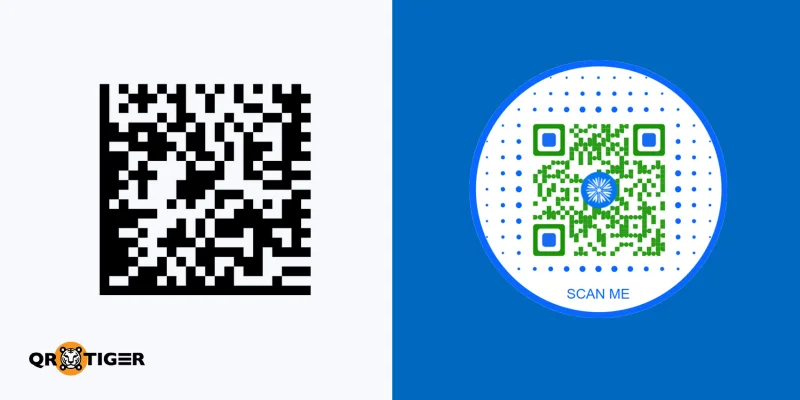
Etykiety urządzeń medycznych GS1 DataMatrixjako główny nośnik UDI i kody QR jako dodatkowa warstwa dla treści cyfrowych.
Różnica ma znaczenie, ponieważ FDA akceptuje tylko formaty automatycznej identyfikacji i przechwytywania danych (AIDC), które kodują pola danych UDI zgodnie z zatwierdzonym standardem agencji wydającej.
Standardowy kod QR prowadzący do strony internetowej nie spełnia tego wymagania.
GS1 DataMatrix jako główny kod kreskowy UDI
GS1 DataMatrix przewyższa kody QR z czterech powodów:
- Efektywność rozmiaru DataMatrix o wymiarach 10 mm na 10 mm pozostaje możliwy do zeskanowania, podczas gdy kod QR z taką samą zawartością zwykle wymaga 25 mm na 25 mm lub większych.
- Wyższa gęstość danych Kompaktowe wymiary są istotne dla instrumentów chirurgicznych, etykiet fiolkowych i opakowań małych urządzeń.
- Silniejsza korekcja błędów Stały Poziom Reed-Solomon o 25 do 33 procent, zaprojektowane dla wilgoci, rękawiczek, środków dezynfekujących i ścierania w środowiskach szpitalnych.
- Kompatybilność skanera medycznego Inwentarz szpitala i skanery Elektronicznej Karty Zdrowia (EHR) są skonfigurowane do analizowania identyfikatorów GS1 z kodów DataMatrix. Kod QR prowadzący do strony internetowej nie zostanie uznany za nośnik UDI przez te systemy.
Kody QR do pracy w drugiej kolejności z DataMatrix
Kody QR służą jako dodatkowe przypadki użycia związane z dostarczaniem treści cyfrowych, współistniejąc obok GS1 DataMatrix, zamiast go zastępować.
- eIFU jest dostępny poprzez zeskanowanie za pomocą smartfona.
- Komunikaty o wycofaniu przekierowują dynamicznie, gdy partia jest dotknięta.
- Karty implantów pacjentów z informacjami o bezpieczeństwie i harmonogramami konserwacji.
- Materiały szkoleniowe i filmy wprowadzające dla personelu klinicznego.
- Komunikaty po rynkowe, takie jak biuletyny dotyczące bezpieczeństwa i aktualizacje produktów.
W Unii Europejskiej argumenty za stosowaniem kodów QR na urządzeniach medycznych stały się silniejsze w lipcu 2025 roku.
Rozporządzenie wykonawcze Komisji (UE) 2025/1234, obowiązujące od 16 lipca 2025 r., rozszerzyło zakres uprawnień do instrukcji użytkowania elektronicznych na niemal wszystkie wyroby medyczne i akcesoria przeznaczone dla użytkowników profesjonalnych zgodnie z Rozporządzeniem w sprawie wyrobów medycznych 2017/745.
Producenci sprzedający na terenie UE mają teraz jasną ścieżkę do zastąpienia obszernych wielojęzycznych wkładek papierowych kodem QR, który prowadzi do kontrolowanego portalu eIFU.
GS1 Digital Link jako wschodząca opcja
Niektóre implementacje kodów QR używają GS1 Digital Link Formatuje dane UDI jako odnośnik internetowy. Ten sam kod działa dla skanerów szpitalnych i smartfonów używanych do uzyskiwania dostępu do eIFU lub informacji o produkcie.
Jak to działa
Tradycyjna składnia GS1 koduje UDI jako ciąg elementów. Tylko skanery łańcucha dostaw rozumieją ten format. GS1 Digital Link koduje te same dane jako adres URL. Zarówno skanery, jak i smartfony przetwarzają je.
Tradycyjny UDI : (01)00850006000012(10)ABC123(17)280629
GS1 Digital Link https://id.example.com/01/00850006000012/10/ABC123?17= 280629
System inwentaryzacji szpitala skanuje kod i pobiera dane GTIN oraz partii. Klinicysta skanuje ten sam kod za pomocą telefonu i trafia na stronę eIFU producenta lub komunikatu dotyczącego bezpieczeństwa.
Kody QR GS1 są oddzielone od wymagań dotyczących nośnika UDI GS1 DataMatrix, ale coraz bardziej istotne dla producentów konsolidujących dodatkowe kody QR.
Co to jest bezpośrednie znakowanie części i kiedy się stosuje?
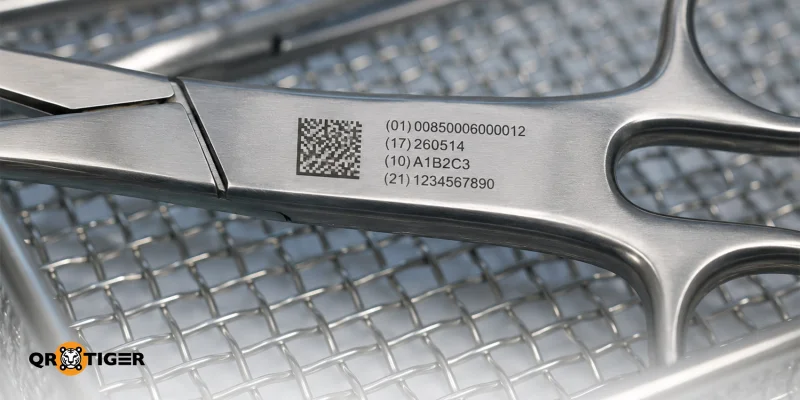
Bezpośrednie znakowanie części (DPM) odnosi się do trwałego znakowania UDI na samym urządzeniu, a nie na opakowaniu ani etykiecie. DPM dotyczy urządzeń wielokrotnego użytku, które są poddawane procesowi ponownego przetwarzania między użyciem przez pacjentów.
Urządzenia wymagające DPM obejmują:
- Instrumenty chirurgiczne takie jak kleszcze, skalpele, odwodniki i zaciski.
- Endoskopy i inne wielokrotnego użytku sprzęt diagnostyczny.
- Napędzane ręczne narzędzia chirurgiczne i wielokrotnego użytku komponenty wiertarskie.
- Wielokrotnego użytku instrumenty ortopedyczne stosowane podczas procedur pacjenta.
DPM przetrwa czyszczenie i cykle sterylizacji, którym urządzenie poddawane jest przez lata użytkowania. Dwa najczęstsze metody to wyrywanie laserowe i wyrywanie elektrochemiczne.
Inne podejścia obejmują znakowanie kropkowe, piaskowanie i łączenie na bazie atramentu do zastosowań nieinwazyjnych.
GS1 DataMatrix jest jedynym nośnikiem danych zalecanym do zastosowania w przypadku znakowania urządzeń medycznych DPM zgodnie z Standard Ogólne Specyfikacje GS1 Znak tworzy trwałą tożsamość urządzenia.
Kiedy oryginalna etykieta i opakowanie znikną, oznaczenie na samym instrumencie nadal zawiera UDI i prowadzi z powrotem do rekordu GUDID.
Jak zgłoszenia do GUDID wpływają na zgodność etykiet
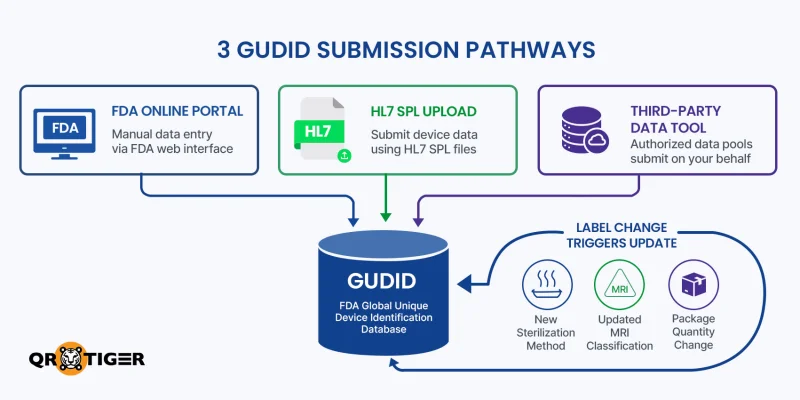
Każde urządzenie podlegające wymaganiom dotyczącym UDI ma odpowiadający mu rekord w GUDID, często nieformalnie nazywany bazą danych UDI FDA.
Etykieciarz przesyła ten rekord za pośrednictwem portalu internetowego FDA za pomocą przesyłki etykiet produktów w formacie HL7 Structured Product Labeling (SPL) lub za pośrednictwem zewnętrznej puli danych, a następnie utrzymuje dokładność przez cały cykl życia produktu.
Wnioski GUDID obejmują atrybuty urządzenia, takie jak:
- Nazwa marki, nazwa produktu oraz wersja lub model urządzenia.
- Klasyfikacja urządzeń i ścieżka regulacyjna.
- Metoda sterylizacji i okres przydatności do spożycia.
- Klasyfikacja i oznakowanie bezpieczeństwa rezonansu magnetycznego (MRI).
- Konfiguracja opakowań na każdym poziomie (jednostka użytkowa, pośrednia, karton).
Kiedy urządzenie potrzebuje nowego numeru GTIN?
Zmiana etykiety nie zawsze wymaga nowego GTIN, ale kilka konkretnych zmian tak. Zgodnie z GS1 Healthcare US, producenci przypisują nowy GTIN, gdy:
- Specyfikacje urządzenia, wydajność, rozmiar lub skład ulegają zmianie poza określonymi limitami.
- Liczba sztuk w opakowaniu zmienia się lub dodawana jest nowa konfiguracja opakowania.
- Pakiet przemieszcza się między sterylnym a niesterylnym.
- Język etykietowania lub znaki certyfikacyjne zmieniają się w zależności od rynku.
- Wymiary zewnętrzne opakowania się zmieniają.
Każde z tych wyzwalaczy powoduje nowy rekord GUDID, a nie tylko aktualizację istniejącego. Wprowadź tę kontrolę do swojego procesu zmian etykiet przed przystąpieniem do druku zmiany.
Kiedy fizyczna etykieta i rekord GUDID oddalają się od siebie, cierpi zgodność. Szpitale skanujące kod oczekują, że baza danych będzie zgodna z wydrukowanym tekstem.
Niezgodności sygnalizują błędne oznakowanie, co wiąże się z konsekwencjami egzekwowania zgodnie z przepisami dotyczącymi błędnego oznakowania FDA.
Nieumieszczenie identyfikatora UDI na etykietach zgodnie z 21 CFR 801.20(a) i 21 CFR 830 należy do jednych z najczęstszych obserwacji inspektorów FDA dotyczących urządzeń medycznych.
Jak wybrać odpowiedni kod kreskowy dla klasy urządzenia
Wybór kodu kreskowego zależy od trzech pytań: klasy urządzenia, środowiska skanowania i czy dane produkcyjne pojawiają się na etykiecie. Każda kombinacja wskazuje na konkretny format.
| Klasa urządzenia | Środowisko | Dane produkcyjne | Zalecany kod kreskowy | Struktura GTIN |
| Klasa I | Detal | Nie | UPC-A lub EAN-13 | GTIN-12 lub GTIN-13 |
| Klasa I | Nie detaliczny | Nie | UPC-A, EAN-13, GS1-128, GS1 DataMatrix, GS1 DataBar lub ITF-14 | GTIN-12, GTIN-13 (w formacie 14 cyfr) lub GTIN-14 |
| Klasa I | Nie detaliczny | Dobrowolny | GS1-128, GS1 DataMatrix lub GS1 DataBar | GTIN-12, GTIN-13 (w formacie 14 cyfr) lub GTIN-14 |
| Klasa II lub III | Detal | Tak | UPC-A lub EAN-13 + GS1-128, GS1 DataMatrix lub GS1 DataBar | GTIN-12 + GTIN-12 (w formacie 14-cyfrowym), lub GTIN-13 + GTIN-13 (w formacie 14-cyfrowym) |
| Klasa II lub III | Nie detaliczny | Tak | GS1-128, GS1 DataMatrix, GS1 DataBar lub ITF-14 | GTIN-12 (w formacie 14-cyfrowym), GTIN-13 (w formacie 14-cyfrowym) lub GTIN-14 |
Powszechne błędy związane z zgodnością UDI, których należy unikać
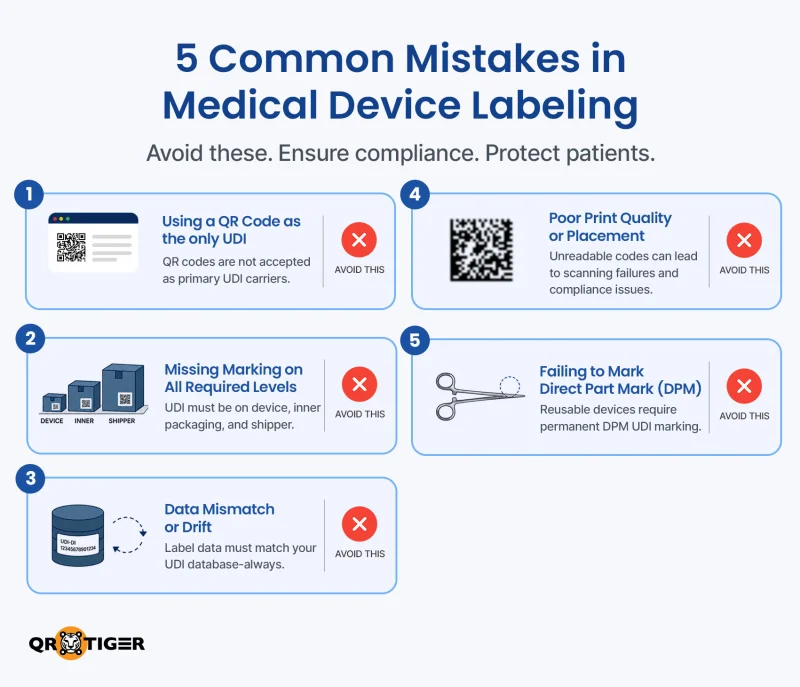
Producenci napotykają na te same pułapki podczas kontroli FDA, listów ostrzegawczych i wewnętrznych przeglądów zgodności. Rozpoznanie wzorców pomaga uniknąć ich w własnym programie etykietowania.
- Wykorzystanie kodu QR jako nośnika UDI Kod QR, który otwiera przeglądarkę, nie spełnia wymagań FDA dotyczących automatycznej identyfikacji i gromadzenia danych (AIDC). Kod kreskowy musi zakodować pola danych UDI, a nie przekierowanie URL. Skanery szpitalne analizują ciągi danych, a nie adresy URL.
- Zapominając o pośrednich poziomach pakowania UDI dotyczy każdego poziomu wejścia do dystrybucji: jednostka użytkowa, pośrednia i przesyłkowa. Nawet jeśli jednostka jest poprawnie oznakowana, ale spakowana w nieoznakowany zewnętrzny karton, jest to niezgodne z przepisami.
- Traktowanie GUDID jako jednorazowego zgłoszenia Rekord bazy danych musi odzwierciedlać aktualną fizyczną etykietę. Rozbieżność między nimi stanowi naruszenie, nawet gdy obie wyglądają dobrze indywidualnie. Wprowadź recenzję GUDID do każdego procesu zmiany etykiety.
- Pomijanie walidacji jakości druku Kod na etykiecie nadal nie działa, jeśli jest rozmazany, zbyt mały lub naklejony na zakrzywionej powierzchni. Jakość druku nie jest luksusem jakościowym. Jest to część wymogu zgodności.
- Ignorowanie bezpośredniego znakowania na wielokrotnego użytku urządzeń Przydatne instrumenty wymagają DPM oprócz znakowania etykietą. Znak przetrwa cykle przetwarzania i powiąże się z rekordem GUDID, gdy etykieta zniknie.
Podsumowanie
- US FDA UDI dotyczy każdego regulowanego wyrobu medycznego, zarówno w postaci czytelnej dla człowieka, jak i w formacie czytelnym dla maszyny.
- GS1 DataMatrix jest standardowym kodem kreskowym dla podstawowego identyfikatora UDI na większości etykiet urządzeń.
- Kody QR uzupełniają kod DataMatrix dla eIFU, aktualizacji dotyczących wycofania oraz dodatkowych treści cyfrowych.
- Wniosek GUDID jest wymagany dla każdego oznaczonego urządzenia, a aktualizacje są wywoływane przez każdą zmianę etykiety.
- Bezpośrednie oznakowanie części dotyczy wielokrotnego użytku urządzeń, które są poddawane procesowi ponownego przetwarzania między użyciem przez pacjentów.
Twój kolejny krok w zakresie zgodności z UDI FDA w USA
Każde uregulowane urządzenie medyczne na rynku amerykańskim posiada teraz identyfikator urządzenia medycznego (UDI). Dla większości producentów, jako główny nośnik stosowany jest GS1 DataMatrix, a dla wszystkiego innego - kod QR.
Zbuduj przepływ pracy etykietowania obejmujący oba formaty. DataMatrix do identyfikacji i kod QR do treści cyfrowej z nim związanej.
Jako certyfikowany partner rozwiązania GS1 Digital Link w USA, Wielkiej Brytanii i Singapurze, QR TIGER pomaga producentom tworzyć dynamiczne kody QR, analizować skany i aktualizować treści docelowe bez konieczności ponownego drukowania etykiet.
Funkcja GS1 DataMatrix jest w drodze. Wkrótce oba formaty będą działać na jednej platformie: DataMatrix dla podstawowego identyfikatora UDI, kod QR dla warstwy cyfrowej.
Zacznij dzisiaj. 
Typowe pytania dotyczące zgodności z UDI
Jaka jest różnica między GS1 a UDI?
UDI to koncepcja regulacyjna FDA, unikalny identyfikator wymagany na każdym regulowanym urządzeniu medycznym. GS1 to jedna z trzech organizacji standaryzacyjnych akredytowanych przez FDA, których producenci używają do strukturyzowania swojego UDI, obok HIBCC i ICCBBA.
Czy UDI jest częścią GTIN?
Relacja działa w drugą stronę. GTIN jest częścią UDI, a nie odwrotnie. Dla producentów korzystających ze standardów GS1, GTIN pełni rolę identyfikatora urządzenia (DI) w ramach UDI, a następnie jest łączony z identyfikatorami produkcji, takimi jak numer partii i data ważności.
Czy można używać tych samych numerów identyfikacyjnych UDI dla USA i UE?
Częściowo. Jeśli korzystasz ze standardów GS1, ten sam GTIN działa jako identyfikator urządzenia na obu rynkach. UE wymaga dodatkowego identyfikatora, podstawowego UDI-DI, który grupuje urządzenia według rodziny produktów i nie jest używany w systemie amerykańskim.
Czy kody QR można używać do identyfikacji produktów przez FDA?
Tak, ale tylko jako uzupełnienie. FDA wymaga kodu kreskowego czytelnego dla maszyny, który koduje dane UDI zgodnie z zatwierdzonym standardem agencji wydającej, a GS1 DataMatrix spełnia tę główną rolę.

Warunki i definicje
przypomnieć sobie Formalna akcja mająca na celu usunięcie lub poprawienie urządzenia medycznego, które nie spełnia standardów bezpieczeństwa i jakości.
Reed-Solomon Metoda korekcji błędów wbudowana w kody kreskowe 2D, takie jak GS1 DataMatrix. Pozwala skanerowi odczytać kod QR nawet wtedy, gdy jego części są uszkodzone lub zabrudzone.
GS1 DataMatrix Kod kreskowy 2D zgodny ze standardami GS1. Zawiera podstawowy identyfikator urządzenia medycznego na większości etykiet, ponieważ format pozwala pomieścić wiele danych na małej przestrzeni.
Automatyczna identyfikacja i przechwytywanie danych (AIDC) Jakakolwiek technologia, która pozwala maszynie odczytywać dane z fizycznego przedmiotu bez konieczności wpisywania ich przez osobę. Przykłady obejmują kody QR, kody kreskowe i tagi RFID.
Elektroniczna Karta Pacjenta (EHR) Cyfrowa karta pacjenta używana przez szpitale i kliniki. Przechowuje historię medyczną, leki i wyniki badań laboratoryjnych.
elektroniczna instrukcja obsługi (eIFU) Cyfrowa wersja instrukcji obsługi w formie papierowej, która jest dostarczana wraz z urządzeniem medycznym.
Europejski Numer Artykułu (EAN) Standard identyfikatora produktu składający się z 13 cyfr, stosowany w handlu detalicznym na całym świecie, pierwotnie nazywany Europejskim Numerem Artykułu. EAN jest teraz oficjalnie znany jako GTIN-13 zgodnie ze standardami GS1.
Identyfikatory aplikacji GS1 (AIs) Krótkie kody numeryczne, które informują skaner, jaki rodzaj danych następuje. Przykład: AI (10) sygnalizuje, że następne znaki to numer partii.
Global Trade Item Number (GTIN) GS1-wydany identyfikator dla produktów, od pojedynczych jednostek do opakowań zbiorczych. Pełni rolę identyfikatora urządzenia w UDI.
Globalna Baza Unikatowych Identyfikatorów Urządzeń (GUDID) Centralna baza danych FDA przechowująca rekordy każdego urządzenia medycznego z UDI.
Kod kreskowy dla branży zdrowotnej (HIBC) To standard identyfikatorów zarządzany przez HIBCC. Wykorzystuje alfanumeryczne kody do identyfikacji urządzeń medycznych w łańcuchach dostaw.
Etykietowanie produktu strukturalnego HL7 (SPL) Strukturalny format danych opublikowany przez Health Level Seven International (HL7). Producenci używają plików SPL do przesyłania danych urządzenia do FDA zbiorczo, zamiast ręcznego wprowadzania ich przez portal internetowy.
Kod Narodowy Leków (NDC) 10-cyfrowy identyfikator produktów farmaceutycznych. NDC nadal jest używany dla leków, ale nie jest już dozwolony na nowych urządzeniach oznakowanych UDI.
Kod Narodowego Towarowego Kodu Zdrowotnego (NHRIC) 10-cyfrowy identyfikator, którego używała FDA dla produktów medycznych przed UDI.
Uniwersalny Kod Produktu (UPC) Standard kodów kreskowych detalicznych stosowany głównie w USA i Kanadzie. UPC-A to powszechna wersja 12-cyfrowa skanowana przy kasie.
Regulacje
Kodeks Regulacji Federalnych (CFR) Napisane zbiory zasad opublikowane przez agencje federalne w USA. Każda zasada jest grupowana według tytułu, części i sekcji.
- 21 CFR 801.20(a) Reguła federalna ustanawiająca wymagania dotyczące identyfikatora urządzenia medycznego (UDI). Określa wymaganie dotyczące etykietowania UDI na urządzeniach medycznych.
- 21 CFR 830 Obejmuje szerszy system UDI, w tym bazę danych GUDID.
Aktualne Dobre Praktyki Wytwarzania (CGMP) Zasady FDA dotyczące projektowania, produkcji, pakowania i przechowywania urządzeń medycznych i leków.
Rozporządzenie w sprawie wyrobów medycznych 2017/745 Zbiór zasad Unii Europejskiej dotyczący sposobu sprzedaży wyrobów medycznych w UE.
Organizacje
Agencja Żywności i Leków (FDA) Agencja federalna USA odpowiedzialna za regulowanie wyrobów medycznych, leków, żywności i kosmetyków. FDA definiuje i egzekwuje zasadę UDI.
Globalne Standardy (GS) Organizacja non-profit opracowująca globalne standardy łańcucha dostaw, w tym kody kreskowe, identyfikatory produktów i łącza cyfrowe.
Rada Komunikacji Biznesowej Branży Zdrowotnej (HIBCC) Organizacja non-profit wydająca identyfikatory UDI zgodnie ze standardem HIBC.
Międzynarodowa Rada ds. Automatyzacji Wspólnych Standardów Bankowości Krwi (ICCBBA) Organizacja zarządzająca standardem ISBT 128. 
Ten artykuł ma charakter ogólnoinformacyjny i nie stanowi porady prawnej, finansowej ani innej profesjonalnej porady. W przypadku pytań dotyczących produktów lub usług firmy QR TIGER, skontaktuj się z naszym zespołem wsparcia pod adresem [email protected].
Najczęściej zadawane pytania (FAQ)
What is the difference between GS1 and UDI?
Is UDI part of GTIN?
Can you use the same UDI numbers for the US and the EU?
Can QR codes be used for FDA UDI?
Czy ten artykuł był pomocny?
Zwiększ liczbę skanów dzięki najlepszemu generatorowi kodów QR
Dołącz do tysięcy globalnych marek korzystających z QR TIGER do zarządzania dynamicznym kierowaniem, masowym tworzeniem oraz głęboką analizą atrybucji.
Rozpocznij za darmo